History, Techniques and Recipes
If you were to lighty dry hop a classic German pilsner and call it an Italian Pilsner, you would not be incorrect, but there is a little more to the style than dry hops. From the classic Birrifico Italiano Tipopils that started this style, to beers that were inspired by Tipopils like Firestone Walker’s Pivo Pils, to today’s emerging American interpretations, there is a lot of ground to cover. A surprisingly delicious assortment of beers fall under the category of Italian pilsner and we’ll talk about them all. Their common thread is that they feature more hop flavor than most traditional pilsner varieties, while maintaining that classic dry, crisp snappiness that is the hallmark of any pilsner beer.
History
In the mid-1990s, Agostino Arioli founded his brewery, Birrificio Italiano, in the Como region of the Italian province of Lombardy, near the sleek and fashionable city of Milan. Having been trained in the classical German style, but being heavily Influenced by the dry hopped cask ales of England, Arioli created a rather unique beer, a pilsner that was very lightly dry hopped, called Tipopils, or “kind of pils.” Arioli was trying to create a beer like Jever, the Southern German Pils, but perhaps due to his cask ale leanings and surrounded by the cuisine of Italy, he ended up with something else entirely - the Italian Pilsner.
Other Italian brewers influenced by Tipopils, and nearby, famed centers of Italian cuisine, followed suit, and before you know it this more-flavorful pilsner became widespread in Italy, foretelling the explosion of dry-hopped pilsners almost two decades earlier, and helping cement the hallmarks and reputation of Italian Pilsner.
Italian Pilsner is a pale beer and can have a very light haze, owing to the pair of dry hop additions that this beer gets, and lands 4% and 5.4% abv. It often features a somewhat more flavorful malt character, without the decoction used by Czech brewers, due to the use of Mediterranean grown barley varietals. Most critically, the beer is dry-hopped using only traditional German or Czech hops or new varieties that resemble traditional ones to give a very pronounced traditional European hop character.
This beer became a sensation among brewers in the know, almost a cult favorite. It is not surprising that many have compared it to Italian cuisine, flavorful and sophisticated, given the regions that surround the two godfathers of the Italian Pilsner style.
Fast forward a couple decades to 2013 and Matt Brynildson, brewmaster at Firestone Walker, was inspired by Tipopils to create Pivo Pils. Pivo Pils has gained a strong following over the years for being a bright, hop forward lager, but one that still retained the trademark crispness and bready malt flavor of a pilsner.
Today, modern American versions are starting to blur the line between hoppy lager/IPL and Italian pilsner. They are more aggressively dry hopped, sometimes with a slightly higher ABV to help provide malt balance, but the best of these are still distinctly dry and crisp, the hallmark of any pilsner. In my opinion, these are well worth seeking out and I interpret these as being sort of an extension of the original Italian pilsner, which is arguably an extension of German pilsner. It’s interesting to see how a seemingly simple pilsner beer can evolve and morph over time in the hands of different creative brewers.
Recipe Building
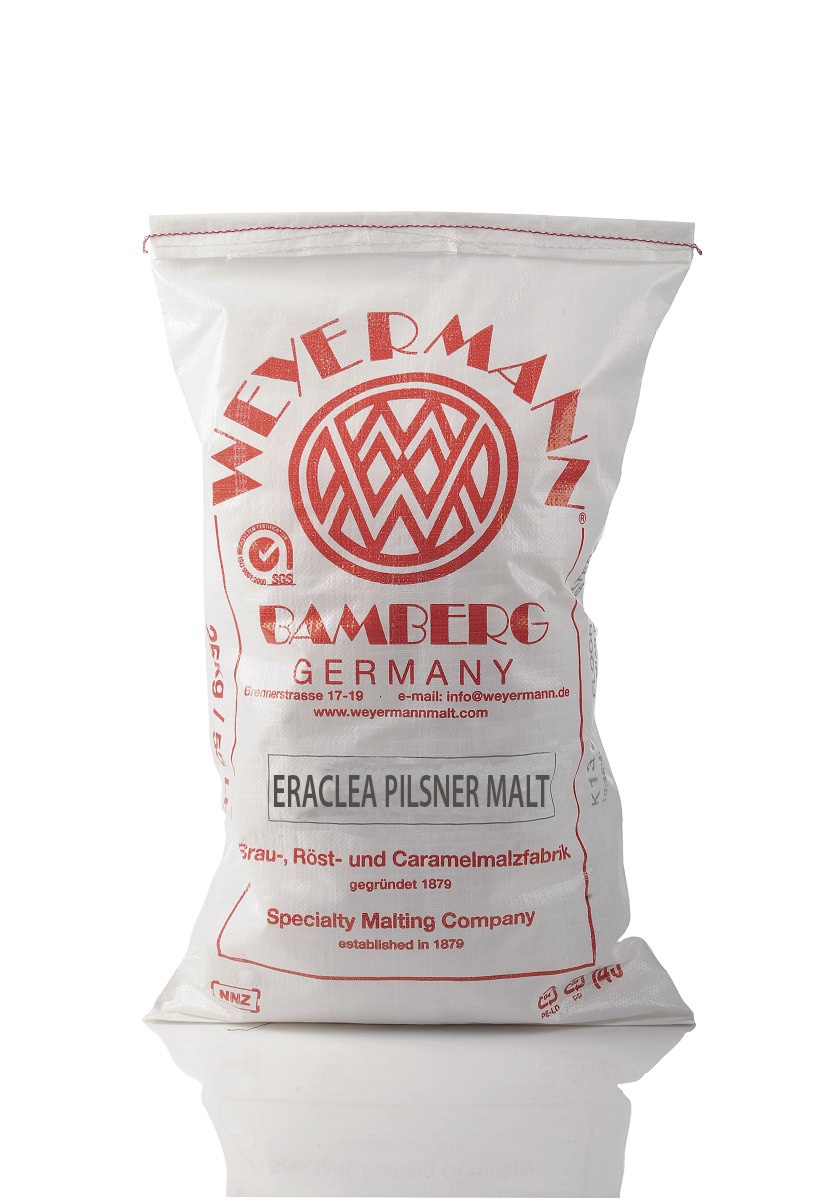
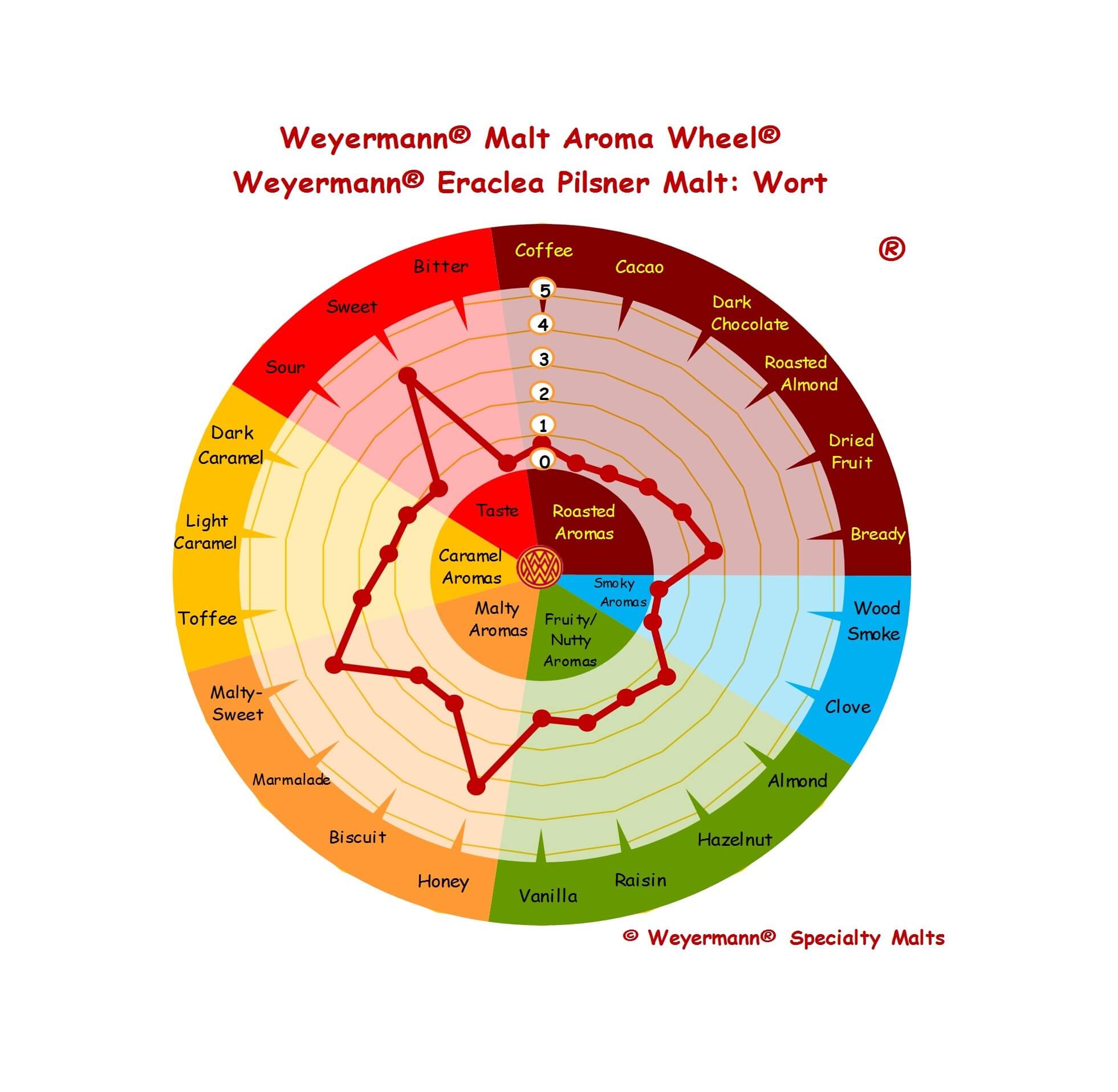
Starting with the grain bill, most, if not all of your malt should be of the pilsner variety. For a more authentic version, use Italian-grown pilsner malts, with Weyermann’s Eraclea Malt likely being the most accessible for homebrewers in most parts of the world. Some brewers blend some of the Eraclea with a domestic American pilsner malt, since the Eraclea has a pretty strong malt flavor for a pilsner malt, more so than even the Weyermann Barke Pils, and American pilsner malt is known for lighter flavor and higher conversion. A new and exciting variety that seems like a great fit for Italian Pilsner is Rahr’s North Star Pils. You can also use other European pilsner malt for your base, particularly German or Czech varieties.
A very small amount (1-2%) of caramunich (what Tipopils uses), carafoam (what Pivo uses), carahell, carapils or even a more subtle munich or vienna is also fine, but not necessary. 100% pilsner malt is entirely acceptable and a good base for this style.
From there, you’ll want to think about mash pH. According to Jeff Alworth, Agostino Arioli is obsessive about pH at every step of the brewing process, deeming it an essential part of achieving the flavorful profile of his pilsner, and he begins by targeting a 5.1 starting fermentation pH, adjusting the pH with acid as necessary at every pH check. You can get to the post-boil target of 5.1 pH by nailing a mash pH in the range of 5.2-5.4. I usually use acidulated malt to lower my pH, but lactic acid or phosphoric acid additions are fine for mash pH adjustment too.
A step mash is ideal for these beers, and if you select a somewhat undermodified pilsner malt or want to enhance the foam in the beer, then a protein rest might be appropriate as one of the steps. A good protein rest can happen for 10-15 minutes at about 122°F/50°C. Otherwise, I usually use a similar step mash as I would for my German pilsners. I mash in at 144°F/62°C and rest for 40 minutes, jump up to 160°F/71°C and rest for 40 minutes and finally go to 170°F/77°C and rest for 10 minutes. Single infusion mashes aren’t uncommon in the American varieties of these beers, particularly when using American pilsner malt. I would target 148°F/64-65°C for a single infusion mash on this beer.
In terms of hop selection, using traditional German or Czech varieties, or newer varieties with similar flavor profiles, are a necessary part of the Italian Pilsner style. Tipopils uses German Northern Brewer and Perle varieties to bitter, Spalter at flameout and then Saphir and Spalter in the dry hop. Pivo uses Spalter and Tradition in the boil, with Saphir both in the boil and the dry hop. Tim Adams of Oxbow Brewing Company, who makes what might be the highest regarded American-made version of Italian Pilsner insists that if you can taste the presence of modern IPA hops then it “immediately and definitively disqualifies a beer from being an authentic Italian-style pils.”
Feel free to play around though, Tettnanger and Saaz is a wonderful combination that I’ve had great results with personally, and Hallertau Mittelfruh is always an excellent hop for any European or American pilsner. More modern American interpretations go a step further, using descendants of noble hops and/or newer varieties of German (and neighboring country) hops. Hallertau Blanc and Hull Melon are two hops I’ve tasted working very effectively in some American versions, but if you want to stay true to the beautifully-balanced Italian Pilsner style, use these hops in a restrained manner so as not to end up with an American style “India Pale Lager” (IPL). With more hops being used in this pilsner style than in German or Czech versions, it can be important to use a higher alpha acid (but regionally appropriate and clean) bittering hop such as German Magnum, to prevent too high a volume of hops being used and making the finished beer too grassy and vegetal. This is especially important if you’re using a heavier dry hop load, like many of the American versions use.
Where the classic Italian pilsner beers really deviate from those German and Czech varieties, is in adding more late hops and just a dose of dry hopping, with the Tipopils adding those dry hops at two stages of the fermentation. If there is one “secret move” in making Italian Pilsner, it’s adding a small addition of one of the recommended hop varieties as dry hops at the start of fermentation in order to achieve biotransformation. This technique may also contribute to the slight haziness of the style, which is a permitted but not necessary characteristic.
I prefer a dry hop addition of around 6g per 5 gallon at the beginning of the primary fermentation, and about double that for dry hopping added post-fermentation during the lagering phase. If you want to get more aggressive, like some of the newer American versions, you can double or even triple those numbers and even combine them into a single dry hop after the primary fermentation.
Use a clean lager yeast strain such as Fermentis 34/70 (liquid equivalents are WLP830, WY2124, L13 and OYL106). Other clean lager strains would be appropriate as well, the goal being to avoid fermentation character conflicting with the malt base and especially the hop flavors. Italian Pilsners do not exhibit any sulfur or diacetyl character, which may be appropriate and are present in some examples of German and Czech pilsners, respectively. Fermentation temperatures can go a little higher than your standard pilsner; they can accommodate the primary dry hop load a little better. Shoot for a range of 52-56°F/11-13°C during the fermentation and ferment for a similar length of time as other pilsners, usually 10-14 days before the beer has reached full attenuation. I like to lean on the younger side for the Italian variety, because the higher primary temperature means it finishes fermenting faster, but also because I have hops in the primary and I want to transfer them off as soon as the beer is ready. As long as you have a healthy pitch of yeast and consistent temperature control, you should be able to achieve final gravity on the earlier side of that timeline as well. Always make sure to do a basic diacetyl test before moving on to the secondary fermentation.
For the lagering phase, dropping by 3-4°F/2°C per day works fine. You can stop at day three or four, rest for 4-6 days before continuing your drop to as near freezing temps as you are comfortable with, before lagering an additional 1-3 weeks. Due to the additional hop flavor from late additions and dry hops, I don’t lager these beers as long as I do for my German or Czech versions, but they still benefit from some lagering time.
Tipopils is unfiltered and it has a touch of a hazy appearance. Pivo Pils, on the other hand, is very finely filtered, allowing it to have a bright, brilliant clarity. I find this to be a personal preference, but do realize that unfiltered versions can be hazy. Cold lagering should clear these up fairly well, even the heavily dry hopped American interpretations usually just have a slight haze to them.
For carbonation, I’d suggest 2.4-2.8 volumes. I like them closer to the upper end of that spectrum, similar to my German pilsners, nice and spritzy. It accentuates the dryness of these beers, but when you’re using quality pilsner malt as your base, you still get a good grainy base malt flavor underneath.
Recipes
I’ve provided full recipes or links for five different versions of Italian Pilsner below and they really cover the spectrum of beers within this style. We start with the modern American interpretation from Westbound & Down Brewing in Idaho Springs, Colorado. We then move into Chino’s more classically-oriented recipe. Weyermann also provided their Mediterranean version, with some unique hops that are utilized to what is closer to a German pils. Next, I’ve provided a link to the recipe for the beer that created this style. And finally, a link to a very interesting newer version from a well respected European beer author.
Westbound & Down Italian Pils
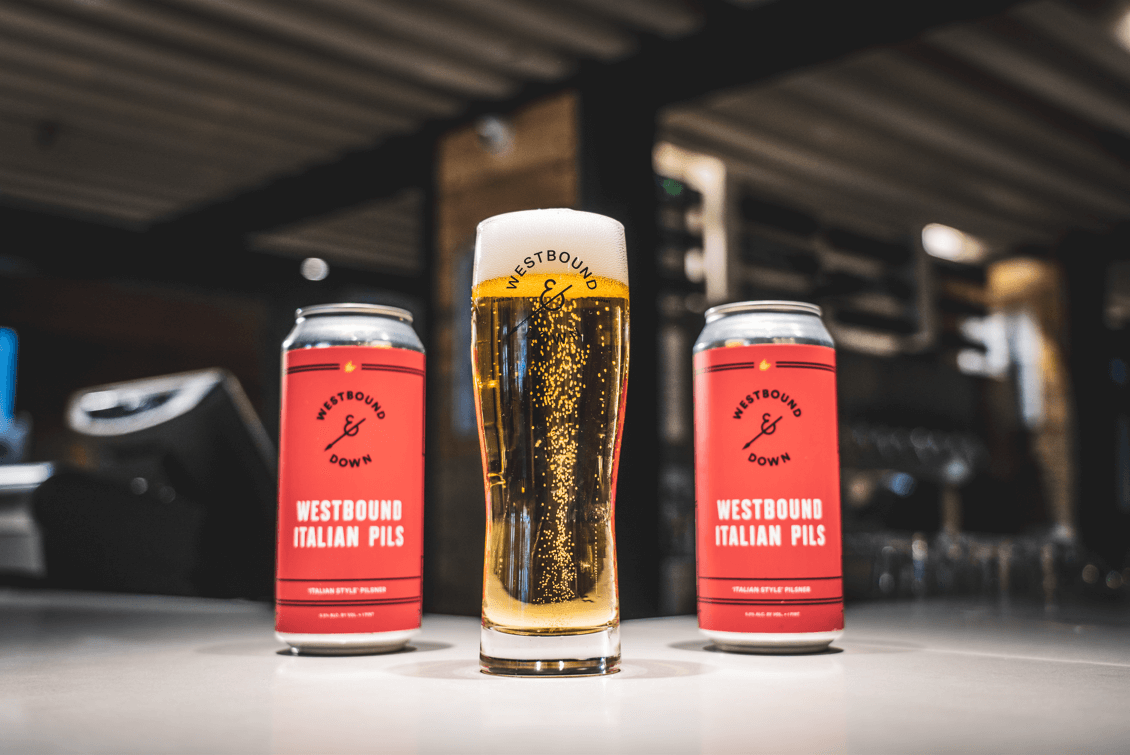
The first time I had this beer it tasted more like what I’d call a hoppy American pilsner than a subtle Italian pilsner. But labels, especially such nuanced classifications like this one, should stand far behind enjoyment and taste. And damn was this a tasty beer. I later reviewed this with another judge for Beer and Brewing Magazine and we got a lot of diesel, dankness and wet grass. It was really a great showcase of hops, and if you’d told me at the time that these were all Czech and German derived hops, I’d have bet against that. I grab a 4-pack of this beer whenever I come across it, Westbound releases these in pretty small batches that are scooped up quite quickly. The beer is always fresh and somehow incredibly bold in hop flavor yet drinkable enough to knock back a few without palate fatigue.
In talking with head brewer Jake Gardner, he believes that Italian pils, like all pilsner beer, needs to be on and off the palate quickly. You have to achieve that at a minimum or the beer is not a pilsner. For his beer, he looked to traditional German pilsner design, but then started moving from noble hops to “noble-adjacent”; hops that are derived from noble hops. He backtracked from your typical 30-40 IBU German pilsner, drawing up about 15 IBUs in the whirlpool before deciding on about 23 IBUs between his two bittering charges. The beer is also dry hopped, to the tune of 1.5lbs/bbl, a staggering number compared to the original Tipopils, but an amount that Jake feels is pretty light for his hop forward brewery (Westbound is known for having one of the best IPA programs in Colorado, focusing heavily on west coast style IPAs). And true to form, the beer is snappy and sessionable, yet bold and aggressive. Jake was kind enough to share the recipe below. I’ve added some of the unique pieces of information that he gave me about the recipe to the notes section in the recipe as well.
BREW SHEET · BEERXML
Westbound & Down Italian Pils
German Pils
Download BeerXML- Batch
- 5.00 gal
- OG
- 1.046
- FG
- 1.010
- ABV
- 4.7%
- IBU
- 38.4
- Boil
- 70 min
Fermentables
| Ingredient | Amount | Details |
|---|---|---|
| Eraclea Pilsner Malt | 5 lbs 10.6 oz | Grain |
| Pilsner Malt (Rahr) | 2 lbs 5.3 oz | Grain |
| Acidulated (Weyermann) | 5.3 oz | Grain |
Hops
| Ingredient | Amount | Addition |
|---|---|---|
| Saaz | 0.70 oz | First Wort · 60.0 min · 4.5% alpha acid |
| Saaz | 0.30 oz | Boil · 70.0 min · 4.5% alpha acid |
| Hallertau Blanc | 0.20 oz | Boil · 70.0 min · 9% alpha acid |
| Saaz | 3.00 oz | Aroma · 10.0 min · 4.5% alpha acid |
| Hallertau Blanc | 1.00 oz | Aroma · 10.0 min · 9% alpha acid |
| Hallertau Blanc | 1.00 oz | Dry Hop · 5.0 min · 9% alpha acid |
| Saphir | 2.00 oz | Dry Hop · 60.0 min · 3.5% alpha acid |
| Saaz | 1.00 oz | Dry Hop · 60.0 min · 4.5% alpha acid |
Yeast
| Ingredient | Amount | Details |
|---|---|---|
| Mexican Lager | 0.00 ml | Omega · OYL-113 |
Mash schedule
- Mash In · 149.0 F · 75 min · 9.84 L infusion
Fermentation
- Primary: 14 days at 11.1 °C
- Secondary: 5 days at 11.1 °C
- Tertiary: 4 days
Brewer’s notes
Note that this recipe is brewed at 7500 feet/2286 meters. All Saaz hops in this recipe are US Saaz. The dry hops are added after primary fermentation is completed. The schedule looks like: Up to 14 days primary at 52F/11C. Do a diacetyl test. Add dry hops for up to 5 days. Rack and move to 40F/4C over a period of 3-4 days. Do another diacetyl test. Crash to nearly freezing and lager until relatively clear, usually 2-3 more weeks. He then does a 2-part biofine process. He adds 1/3 of the biofine at freezing lager temps over 72 hours. Then adds the other 2/3 biofine to the brite tank for 4-6 days then packages. He carbs as much as possible, 2.9-3.1 volumes. Jake recommends a biofine test for your own equipment so that you can use the least amount of biofine that is still effective at clarifying the beer. This test is better explained here - http://www.magnusboner.com/optimization-of-biofine-clear/ Jake targets a 4.3-4.4 final PH for this beer, post dry hop. Jake has subbed Hull Melon for Saphir before. The Mexican Lager yeast that they use goes for six generations. Jake usually knocks out to 2F lower than the target primary temperature, and after the first generation, subsequent generations are fermented at about 50F/10C. Note that I listed the first generation fermentation schedule on this recipe, as most homebrewers will be using first generation yeast for this recipe. SG 1.047 FG 1.0066
Full technical details
Original export fields, ingredient specifications, water, style and equipment.
Fermentables
Eraclea Pilsner Malt
- Name
- Eraclea Pilsner Malt
- Type
- Grain
- Amount (kg / L for liquids)
- 2.5673307
- Yield
- 82.2300000
- Color (SRM)
- 1.7000000
- Add after boil
- FALSE
- Origin
- Germany
- Supplier
- Weyermann
- Notes
- Pilsner base malt for all pilsners, lagers. Highly modified malt.
- Coarse fine diff
- 1.2000000
- Moisture
- 4.4000000
- Diastatic power
- 110.0000000
- Protein
- 10.9000000
- Max in batch
- 100.0000000
- Recommend mash
- TRUE
- Ibu gal per lb
- 0.0000000
- Display amount
- 5 lbs 10.6 oz
- Inventory
- 0.0 oz
- Potential
- 1.0378258
- Display color
- 1.7 SRM
- Extract substitute
- Pilsner Liquid Extract
Pilsner Malt (Rahr)
- Name
- Pilsner Malt (Rahr)
- Type
- Grain
- Amount (kg / L for liquids)
- 1.0568694
- Yield
- 80.0000000
- Color (SRM)
- 1.7000000
- Add after boil
- FALSE
- Origin
- U.S.
- Supplier
- Rahr
- Notes
- A high-quality, economical pilsner malt from Rahr Malting. A bit lighter in color and lower in total protein than Rahr's standard 2-row. Can make up to 100% of the grist for a very pale beer. Great for lagers.
- Coarse fine diff
- 1.5000000
- Moisture
- 4.0000000
- Diastatic power
- 120.0000000
- Protein
- 11.7000000
- Max in batch
- 100.0000000
- Recommend mash
- TRUE
- Ibu gal per lb
- 0.0000000
- Display amount
- 2 lbs 5.3 oz
- Inventory
- 0.0 oz
- Potential
- 1.0368000
- Display color
- 1.7 SRM
Acidulated (Weyermann)
- Name
- Acidulated (Weyermann)
- Type
- Grain
- Amount (kg / L for liquids)
- 0.1496854
- Yield
- 65.2000000
- Color (SRM)
- 1.8000000
- Add after boil
- FALSE
- Origin
- Germany
- Supplier
- Weyermann
- Notes
- Used in Germany to lower PH levels without resorting to chemicals. Lowers mash pH levels, lightens color, improves flavor stability.
- Coarse fine diff
- 1.5000000
- Moisture
- 4.0000000
- Diastatic power
- 0.0000000
- Protein
- 0.0000000
- Max in batch
- 10.0000000
- Recommend mash
- TRUE
- Ibu gal per lb
- 0.0000000
- Display amount
- 5.3 oz
- Inventory
- 0.0 oz
- Potential
- 1.0299920
- Display color
- 1.8 SRM
- Extract substitute
- Pale Liquid Extract
Hops
Saaz
- Name
- Saaz
- Origin
- U.S.
- Alpha acid (%)
- 4.5000000
- Amount (kg / L for liquids)
- 0.0198446
- Use
- First Wort
- Time (min)
- 60.0000000
- Notes
- This traditional variety from the Czech Republic is grown on a limited basis in the U.S. A classic noble aroma that is famously used in Pilsners. Used for: Bohemian-style beers, Continental lagers, Wheats, Pilsener lagers, Ales, Pilsners Aroma: Seasoned herbal character Substitiutions: Czech Saaz, Polish Lublin, Sterling Storage: Poor 2-6% AA / 3-4.5% Beta
- Type
- Aroma
- Form
- Pellet
- Beta
- 3.7500000
- Hsi
- 50.0000000
- Display amount
- 0.70 oz
- Inventory
- 0.00 oz
- Display time
- 60.0 min
Saaz
- Name
- Saaz
- Origin
- U.S.
- Alpha acid (%)
- 4.5000000
- Amount (kg / L for liquids)
- 0.0085048
- Use
- Boil
- Time (min)
- 70.0000000
- Notes
- This traditional variety from the Czech Republic is grown on a limited basis in the U.S. A classic noble aroma that is famously used in Pilsners. Used for: Bohemian-style beers, Continental lagers, Wheats, Pilsener lagers, Ales, Pilsners Aroma: Seasoned herbal character Substitiutions: Czech Saaz, Polish Lublin, Sterling Storage: Poor 2-6% AA / 3-4.5% Beta
- Type
- Aroma
- Form
- Pellet
- Beta
- 3.7500000
- Hsi
- 50.0000000
- Display amount
- 0.30 oz
- Inventory
- 0.00 oz
- Display time
- 70.0 min
Hallertau Blanc
- Name
- Hallertau Blanc
- Origin
- Germany
- Alpha acid (%)
- 9.0000000
- Amount (kg / L for liquids)
- 0.0056699
- Use
- Boil
- Time (min)
- 70.0000000
- Notes
- Floral and fruity with passion fruit, grapefruit, pineapple, grape and lemongrass overtones. One of several new German varieties with bold flavor profiles, perfect for American-style Ales. Used for: American style ale Substitutions: N/A Storage Unknown
- Type
- Aroma
- Form
- Pellet
- Beta
- 5.0000000
- Hsi
- 15.0000000
- Display amount
- 0.20 oz
- Inventory
- 0.00 oz
- Display time
- 70.0 min
Saaz
- Name
- Saaz
- Origin
- U.S.
- Alpha acid (%)
- 4.5000000
- Amount (kg / L for liquids)
- 0.0850485
- Use
- Aroma
- Time (min)
- 10.0000000
- Notes
- This traditional variety from the Czech Republic is grown on a limited basis in the U.S. A classic noble aroma that is famously used in Pilsners. Used for: Bohemian-style beers, Continental lagers, Wheats, Pilsener lagers, Ales, Pilsners Aroma: Seasoned herbal character Substitiutions: Czech Saaz, Polish Lublin, Sterling Storage: Poor 2-6% AA / 3-4.5% Beta
- Type
- Aroma
- Form
- Pellet
- Beta
- 3.7500000
- Hsi
- 50.0000000
- Display amount
- 3.00 oz
- Inventory
- 0.00 oz
- Display time
- 10.0 min
Hallertau Blanc
- Name
- Hallertau Blanc
- Origin
- Germany
- Alpha acid (%)
- 9.0000000
- Amount (kg / L for liquids)
- 0.0283495
- Use
- Aroma
- Time (min)
- 10.0000000
- Notes
- Floral and fruity with passion fruit, grapefruit, pineapple, grape and lemongrass overtones. One of several new German varieties with bold flavor profiles, perfect for American-style Ales. Used for: American style ale Substitutions: N/A Storage Unknown
- Type
- Aroma
- Form
- Pellet
- Beta
- 5.0000000
- Hsi
- 15.0000000
- Display amount
- 1.00 oz
- Inventory
- 0.00 oz
- Display time
- 10.0 min
Hallertau Blanc
- Name
- Hallertau Blanc
- Origin
- Germany
- Alpha acid (%)
- 9.0000000
- Amount (kg / L for liquids)
- 0.0283495
- Use
- Dry Hop
- Time (min)
- 7200.0000000
- Notes
- Floral and fruity with passion fruit, grapefruit, pineapple, grape and lemongrass overtones. One of several new German varieties with bold flavor profiles, perfect for American-style Ales. Used for: American style ale Substitutions: N/A Storage Unknown
- Type
- Aroma
- Form
- Pellet
- Beta
- 5.0000000
- Hsi
- 15.0000000
- Display amount
- 1.00 oz
- Inventory
- 0.00 oz
- Display time
- 5.0 min
Saphir
- Name
- Saphir
- Origin
- Germany
- Alpha acid (%)
- 3.5000000
- Amount (kg / L for liquids)
- 0.0566990
- Use
- Dry Hop
- Time (min)
- 5760.0000000
- Notes
- A new noble breed as an alternative to Hallertau Mittelfrueh in an attempt to make it more disease resistant and commercially viable. Similar in character to Hallertau varieties. Used for: Pilsners, lagers, Belgian whites. Substitutes: Hallertau Mittelfrueh
- Type
- Aroma
- Form
- Pellet
- Beta
- 4.6000000
- Hsi
- 45.0000000
- Display amount
- 2.00 oz
- Inventory
- 0.00 oz
- Display time
- 60.0 min
Saaz
- Name
- Saaz
- Origin
- U.S.
- Alpha acid (%)
- 4.5000000
- Amount (kg / L for liquids)
- 0.0283495
- Use
- Dry Hop
- Time (min)
- 5760.0000000
- Notes
- This traditional variety from the Czech Republic is grown on a limited basis in the U.S. A classic noble aroma that is famously used in Pilsners. Used for: Bohemian-style beers, Continental lagers, Wheats, Pilsener lagers, Ales, Pilsners Aroma: Seasoned herbal character Substitiutions: Czech Saaz, Polish Lublin, Sterling Storage: Poor 2-6% AA / 3-4.5% Beta
- Type
- Aroma
- Form
- Pellet
- Beta
- 3.7500000
- Hsi
- 50.0000000
- Display amount
- 1.00 oz
- Inventory
- 0.00 oz
- Display time
- 60.0 min
Yeast
Mexican Lager
- Name
- Mexican Lager
- Type
- Lager
- Form
- Liquid
- Amount (kg / L for liquids)
- 0.0000000
- Amount is weight
- FALSE
- Laboratory
- Omega
- Product id
- OYL-113
- Min temperature
- 10.0000000
- Max temperature
- 12.7777778
- Flocculation
- Medium
- Attenuation (%)
- 80.0000000
- Notes
- Produces clean lager beer, with a crisp finish. Good for Mexican style light lagers, as well as dark lagers. A versatile lager strain.
- Best for
- Mexican style light and dark lagers.
- Max reuse
- 5
- Times cultured
- 0
- Add to secondary
- FALSE
- Display amount
- 0.00 ml
- Disp min temp
- 50.0 F
- Disp max temp
- 55.0 F
- Inventory
- 0.0 pkg
- Culture date
- 03 Feb 2016
Mash
- Name
- Single Infusion, Light Body, No Mash Out
- Grain temp
- 22.2222222
- Tun temp
- 22.2222222
- Sparge temp
- 75.5555556
- Ph
- 5.4000000
- Tun weight
- 64.0000000
- Tun specific heat
- 0.3000000
- Equip adjust
- TRUE
- Notes
- Simple single infusion mash for use with most modern well modified grains (about 95% of the time).
- Display grain temp
- 72.0 F
- Display tun temp
- 72.0 F
- Display sparge temp
- 168.0 F
- Display tun weight
- 4 lbs
Mash In
- Name
- Mash In
- Type
- Infusion
- Infusion water (L)
- 9.8421274
- Step time (min)
- 75.0000000
- Step temperature (°C)
- 65.0000000
- Ramp time
- 2.0000000
- End temp
- 65.0000000
- Description
- Add 10.40 qt of water at 163.7 F
- Water grain ratio
- 1.250 qt/lb
- Decoction amt
- 0.00 qt
- Infuse temp
- 163.7 F
- Display step temp
- 149.0 F
- Display infuse amt
- 10.40 qt
Recipe details & fermentation
- Name
- Westbound & Down Italian Pils
- Type
- All Grain
- Brewer
- Westbound and Down Brewing Co.
- Batch size (L)
- 18.9271680
- Boil size (L)
- 25.0579932
- Boil time (min)
- 70.0000000
- Efficiency (%)
- 77.0000000
- Notes
- Note that this recipe is brewed at 7500 feet/2286 meters. All Saaz hops in this recipe are US Saaz. The dry hops are added after primary fermentation is completed. The schedule looks like: Up to 14 days primary at 52F/11C. Do a diacetyl test. Add dry hops for up to 5 days. Rack and move to 40F/4C over a period of 3-4 days. Do another diacetyl test. Crash to nearly freezing and lager until relatively clear, usually 2-3 more weeks. He then does a 2-part biofine process. He adds 1/3 of the biofine at freezing lager temps over 72 hours. Then adds the other 2/3 biofine to the brite tank for 4-6 days then packages. He carbs as much as possible, 2.9-3.1 volumes. Jake recommends a biofine test for your own equipment so that you can use the least amount of biofine that is still effective at clarifying the beer. This test is better explained here - http://www.magnusboner.com/optimization-of-biofine-clear/ Jake targets a 4.3-4.4 final PH for this beer, post dry hop. Jake has subbed Hull Melon for Saphir before. The Mexican Lager yeast that they use goes for six generations. Jake usually knocks out to 2F lower than the target primary temperature, and after the first generation, subsequent generations are fermented at about 50F/10C. Note that I listed the first generation fermentation schedule on this recipe, as most homebrewers will be using first generation yeast for this recipe. SG 1.047 FG 1.0066
- Taste rating
- 30.0000000
- Original gravity
- 1.0460000
- Final gravity
- 1.0100000
- Carbonation
- 2.9000000
- Fermentation stages
- 3
- Primary duration (days)
- 14.0000000
- Primary temperature (°C)
- 11.1111111
- Secondary duration (days)
- 5.0000000
- Secondary temperature (°C)
- 11.1111111
- Tertiary duration (days)
- 4.0000000
- Conditioning duration (days)
- 5.0000000
- Conditioning temperature (°C)
- 0.0000000
- Carbonation used
- Keg with 19.56 PSI
- Forced carbonation
- FALSE
- Priming sugar name
- Forced Carbonation
- Priming sugar equiv
- 1.0000000
- Keg priming factor
- 0.5000000
- Carbonation temp
- 7.2222222
- Display carb temp
- 45.0 F
- Date
- 05 Jul 2021
- Est og
- 1.048 SG
- Est fg
- 1.007 SG
- Est color
- 2.8 SRM
- IBU
- 38.4 IBUs
- Ibu method
- Tinseth
- Est abv
- 5.3 %
- ABV (%)
- 4.7 %
- Actual efficiency
- 74.3 %
- Calories
- 151.6 kcal/12oz
- Display batch size
- 5.00 gal
- Display boil size
- 6.62 gal
- Display og
- 1.046 SG
- Display fg
- 1.010 SG
- Display primary temp
- 52.0 F
- Display secondary temp
- 52.0 F
- Display tertiary temp
- 52.0 F
- Display age temp
- 32.0 F
Style details
- Name
- German Pils
- Category
- Pale Bitter European Beer
- Category number
- 5
- Style letter
- D
- Style guide
- BJCP 2015
- Type
- Lager
- Og min
- 1.0440000
- Og max
- 1.0500000
- Fg min
- 1.0080000
- Fg max
- 1.0130000
- Ibu min
- 22.0000000
- Ibu max
- 40.0000000
- Color min
- 2.0000000
- Color max
- 5.0000000
- Carb min
- 2.5000000
- Carb max
- 3.2000000
- Abv max
- 5.2000000
- Abv min
- 4.4000000
- Notes
- A light-bodied, highly-attenuated, gold-colored, bottom-fermented bitter German beer showing excellent head retention and an elegant, floral hop aroma. Crisp, clean, and refreshing, a German Pils showcases the finest quality German malt and hops. History: Adapted from Czech Pilsner to suit brewing conditions in Germany, particularly water with higher mineral content and domestic hop varieties. First brewed in Germany in the early 1870s. Became more popular after WWII as German brewing schools emphasized modern techniques. Along with its sister beer, Czech Pilsner, is the ancestor of the most widely produced beer styles today. Average IBUs of many well-regarded commercial examples have dropped over time. Style Comparison: Lighter in body and color, drier, crisper, and more fully attenuated, with more of a lingering bitterness, and with higher carbonation than a Czech Premium Pale Lager. More hop character, malt flavor, and bitterness than International Pale Lagers. More hop character and bitterness with a drier, crisper finish than a Munich Helles; the Helles has more malt flavor, but of the same character as the Pils.
- Profile
- Aroma: Medium-low to low grainy-sweet-rich malt character (often with a light honey and slightly toasted cracker quality) and distinctive flowery, spicy, or herbal hops. Clean fermentation profile. May optionally have a very light sulfury note that comes from water as much as yeast. The hops are moderately-low to moderately-high, but should not totally dominate the malt presence. One-dimensional examples are inferior to the more complex qualities when all ingredients are sensed. May have a very low background note of DMS. Appearance: Straw to light gold, brilliant to very clear, with a creamy, long-lasting white head. Flavor: Medium to high hop bitterness dominates the palate and lingers into the aftertaste. Moderate to moderately-low grainy-sweet malt character supports the hop bitterness. Low to high floral, spicy, or herbal hop flavor. Clean fermentation profile. Dry to medium-dry, crisp, well-attenuated finish with a bitter aftertaste and light malt flavor. Examples made with water with higher sulfate levels often will have a low sulfury flavor that accentuates the dryness and lengthens the finish; this is acceptable but not mandatory. Some versions have a soft finish with more of a malt flavor, but still with noticeable hop bitterness and flavor, with the balance still towards bitterness. Mouthfeel: Medium-light body. Medium to high carbonation. Comments: Modern examples of Pils tend to become paler in color, drier in finish, and more bitter as you move from South to North in Germany, often mirroring the increase in sulfate in the water. The Pils found in Bavaria tend to be a bit softer in bitterness with more malt flavor and late hop character, yet still with sufficient hops and crispness of finish to differentiate itself from a Helles. The use of the term ‘Pils’ is more common in Germany than ‘Pilsner’ to differentiate it from the Czech style, and (some say) to show respect.
- Ingredients
- Continental Pilsner malt, German hop varieties (especially Saazer-type varieties such as Tettnanger, Hallertauer, and Spalt for taste and aroma; Saaz is less common), German lager yeast.
- Examples
- König Pilsener, Left Hand Polestar Pils, Paulaner Premium Pils, Schönramer Pils, Stoudt Pils, Tröegs Sunshine Pils, Trumer Pils
- Display og min
- 1.044 SG
- Display og max
- 1.050 SG
- Display fg min
- 1.008 SG
- Display fg max
- 1.013 SG
- Display color min
- 2.0 SRM
- Display color max
- 5.0 SRM
- Og range
- 1.044-1.050 SG
- Fg range
- 1.008-1.013 SG
- Ibu range
- 22.0-40.0 IBUs
- Carb range
- 2.50-3.20 Vols
- Color range
- 2.0-5.0 SRM
- Abv range
- 4.40-5.20 %
Equipment
- Name
- Pot and Cooler ( 5 Gal/19 L) - All Grain
- Boil size (L)
- 25.0579932
- Batch size (L)
- 18.9271680
- Tun volume
- 18.9271680
- Tun weight
- 1.8143680
- Tun specific heat
- 0.3000000
- Top up water
- 0.0000000
- Trub chiller loss
- 2.8390752
- Evap rate
- 8.1576131
- Boil time (min)
- 70.0000000
- Calc boil volume
- TRUE
- Lauter deadspace
- 0.9463584
- Top up kettle
- 0.0000000
- Hop utilization
- 100.0000000
- Cooling loss pct
- 4.0000000
- Notes
- Popular all grain setup. 5 Gallon cooler as mash tun with false bottom, and 7-9 gallon brewpot capable of boiling at least 6 gallons of wort without spilling over. Primarily used for single infusion mashes.
- Display boil size
- 6.62 gal
- Display batch size
- 5.00 gal
- Display tun volume
- 5.00 gal
- Display tun weight
- 4 lbs
- Display top up water
- 0.00 gal
- Display trub chiller loss
- 0.75 gal
- Display lauter deadspace
- 0.25 gal
- Display top up kettle
- 0.00 gal
Chino’s Italian Pils Recipe
Chino relates that he first had his first taste of Italian Pilsner at an event at New York City’s Eataly food hall, where the all-star ‘Birreria Brothers’ (Sam Caligione of Dogfish Head, Leo DeVencenzo of Birra del Borgo and Teo Musso of Baladin) presented a collab version of Italian Pilsner side by side with Tipopils. He believes that we tend to forget most beers we drink but that we are each granted only a few rare beer moments where the streams of time, place, and flavor cross in a magical way. When that moment comes, that beer carries in your memory for years past the last sip. For him, those beers represented one of those moments, and his recipe is inspired by that experience. Note that this is a smaller batch size, you can scale it up pretty easily with modern beer software such as Brewfather or Beersmith. Also note that the final gravity should be between 1.010-1.012, the recipe software makes some conservative assumptions on the fermentability of a stepped mash beer.
BREW SHEET · BEERXML
Italian Pilsner
German Pils
Download BeerXML- Batch
- 2.75 gal
- OG
- 1.046
- FG
- 1.010
- ABV
- 4.7%
- IBU
- 33.9
- Boil
- 60 min
Fermentables
| Ingredient | Amount | Details |
|---|---|---|
| Pilsner (Weyermann) | 5 lbs | Grain |
| Caramunich I (Weyermann) | 3.5 oz | Grain |
| Carafoam (Weyermann) | 2.5 oz | Grain |
Hops
| Ingredient | Amount | Addition |
|---|---|---|
| Hallertau Magnum | 7.09 g | First Wort · 60.0 min · 14% alpha acid |
| Perle | 28.35 g | Boil · 1.0 min · 7.8% alpha acid |
| Saphir | 28.35 g | Dry Hop · 60.0 min · 3.5% alpha acid |
| Saphir | 28.35 g | Dry Hop · 60.0 min · 3.5% alpha acid |
| Tettnang (Tettnang Tettnager) | 28.35 g | Dry Hop · 60.0 min · 3.13% alpha acid |
Yeast
| Ingredient | Amount | Details |
|---|---|---|
| SafLager German Lager | 23.66 ml | DCL/Fermentis · S-189 |
Mash schedule
- Mash In · 142.0 F · 30 min · 6.36 L infusion
- Mash Step · 158.0 F · 30 min · 0 L infusion
Fermentation
- Primary: 4 days at 19.4 °C
- Secondary: 10 days at 19.4 °C
- Tertiary: 7 days
Brewer’s notes
Water profile: Ca 60 ppm, Mg 0, Na 25, Cl 70, SO4 35, HCO3 N/A Target mash pH: 5.2 Adjust any sparge water to 5.5 pH or lower Adjust post- boil pH to 5.1 if needed Adjust finshed beer (degassed sample) to 4.4 pH if needed (it may already be as low as 4.0 to 4.2 pH) First dry hop of 1 oz Saphir is added at pitching. Second dry hops of Saphir and Tettnanger are added while lagering, 2-3 days before final packaging.
Full technical details
Original export fields, ingredient specifications, water, style and equipment.
Fermentables
Pilsner (Weyermann)
- Name
- Pilsner (Weyermann)
- Type
- Grain
- Amount (kg / L for liquids)
- 2.2679600
- Yield
- 82.2300000
- Color (SRM)
- 1.7000000
- Add after boil
- FALSE
- Origin
- Germany
- Supplier
- Weyermann
- Notes
- Pilsner base malt for all pilsners, lagers. Highly modified malt.
- Coarse fine diff
- 1.2000000
- Moisture
- 4.4000000
- Diastatic power
- 110.0000000
- Protein
- 10.9000000
- Max in batch
- 100.0000000
- Recommend mash
- TRUE
- Ibu gal per lb
- 0.0000000
- Display amount
- 5 lbs
- Inventory
- 0.0 oz
- Potential
- 1.0378258
- Display color
- 1.7 SRM
- Extract substitute
- Pilsner Liquid Extract
Caramunich I (Weyermann)
- Name
- Caramunich I (Weyermann)
- Type
- Grain
- Amount (kg / L for liquids)
- 0.0992232
- Yield
- 77.9000000
- Color (SRM)
- 51.0000000
- Add after boil
- FALSE
- Origin
- Germany
- Supplier
- Weyermann
- Notes
- German crystal malt. Adds maltiness, flavor, color and aroma.
- Coarse fine diff
- 0.0000000
- Moisture
- 5.5000000
- Diastatic power
- 0.0000000
- Protein
- 0.0000000
- Max in batch
- 10.0000000
- Recommend mash
- FALSE
- Ibu gal per lb
- 0.0000000
- Display amount
- 3.5 oz
- Inventory
- 0.0 oz
- Potential
- 1.0358340
- Display color
- 51.0 SRM
Carafoam (Weyermann)
- Name
- Carafoam (Weyermann)
- Type
- Grain
- Amount (kg / L for liquids)
- 0.0708737
- Yield
- 80.0700000
- Color (SRM)
- 2.0000000
- Add after boil
- FALSE
- Origin
- Germany
- Supplier
- Weyermann
- Notes
- Carafoam (also called Carapils) adds body and head retention without substantially altering flavor. Up to 10% for light beers, 40% for mashed beers
- Coarse fine diff
- 1.5000000
- Moisture
- 4.9000000
- Diastatic power
- 0.0000000
- Protein
- 0.0000000
- Max in batch
- 40.0000000
- Recommend mash
- FALSE
- Ibu gal per lb
- 0.0000000
- Display amount
- 2.5 oz
- Inventory
- 0.0 oz
- Potential
- 1.0368322
- Display color
- 2.0 SRM
Hops
Hallertau Magnum
- Name
- Hallertau Magnum
- Origin
- Germany
- Alpha acid (%)
- 14.0000000
- Amount (kg / L for liquids)
- 0.0070874
- Use
- First Wort
- Time (min)
- 60.0000000
- Notes
- German Hallertauer hybrid, widely used in Germany. Extremely appropriate for early boil additions. Used for: German ales and lagers, bitters, IPAs, pilsners, pale ales, stouts. Aroma: somewhat unnoticeable aroma; stable spicy flavor Substitutes: Hallertau Taurus, Columbus, Nugget Storage: Excellent (80%-85% AA after 6 months at 20 C) 12-14% AA / 4.5-5.5% Beta
- Type
- Bittering
- Form
- Pellet
- Beta
- 6.5000000
- Hsi
- 17.5000000
- Display amount
- 7.09 g
- Inventory
- 0.00 g
- Display time
- 60.0 min
Perle
- Name
- Perle
- Origin
- Germany
- Alpha acid (%)
- 7.8000000
- Amount (kg / L for liquids)
- 0.0283495
- Use
- Boil
- Time (min)
- 1.0000000
- Notes
- Perle has a spciy character, and the aroma is moderate and pleasing. Commonly compared to Hallertau Mittlefruh. Used for: German ales, lagers, Plisner, Alt, Maisbier, Dunkle, Kolsch Aroma: Delicate floral and fruity tones Substitutes: Northern Brewer, Perle (U.S.), Hallertau Mittelfruh, Hallertau Aroma Storage: Good 6-10% AA / 2.5-5% Beta
- Type
- Aroma
- Form
- Pellet
- Beta
- 4.5000000
- Hsi
- 25.0000000
- Display amount
- 28.35 g
- Inventory
- 0.00 g
- Display time
- 1.0 min
Saphir
- Name
- Saphir
- Origin
- Germany
- Alpha acid (%)
- 3.5000000
- Amount (kg / L for liquids)
- 0.0283495
- Use
- Dry Hop
- Time (min)
- 20160.0000000
- Notes
- A new noble breed as an alternative to Hallertau Mittelfrueh in an attempt to make it more disease resistant and commercially viable. Similar in character to Hallertau varieties. Used for: Pilsners, lagers, Belgian whites. Substitutes: Hallertau Mittelfrueh
- Type
- Aroma
- Form
- Pellet
- Beta
- 4.6000000
- Hsi
- 45.0000000
- Display amount
- 28.35 g
- Inventory
- 0.00 g
- Display time
- 60.0 min
Saphir
- Name
- Saphir
- Origin
- Germany
- Alpha acid (%)
- 3.5000000
- Amount (kg / L for liquids)
- 0.0283495
- Use
- Dry Hop
- Time (min)
- 4320.0000000
- Notes
- A new noble breed as an alternative to Hallertau Mittelfrueh in an attempt to make it more disease resistant and commercially viable. Similar in character to Hallertau varieties. Used for: Pilsners, lagers, Belgian whites. Substitutes: Hallertau Mittelfrueh
- Type
- Aroma
- Form
- Pellet
- Beta
- 4.6000000
- Hsi
- 45.0000000
- Display amount
- 28.35 g
- Inventory
- 0.00 g
- Display time
- 60.0 min
Tettnang (Tettnang Tettnager)
- Name
- Tettnang (Tettnang Tettnager)
- Origin
- Germany
- Alpha acid (%)
- 3.1300000
- Amount (kg / L for liquids)
- 0.0283495
- Use
- Dry Hop
- Time (min)
- 4320.0000000
- Notes
- One of the four noble hops along with Saaz, Spalt, and Hallertau Mittelfrueh, a group of mainland European hops that are prized for their similar, delicate flavor and aroma profile. Used for: German ales, lagers, wheat Aroma: Noble, Mild and pleasant with balanced earthy, herbal and floral aroma impressions Substitutes: Saaz, Spalt, Hallertau Mittelfrueh Storage: Poor 2.5-6% AA / 3-5% Beta
- Type
- Aroma
- Form
- Pellet
- Beta
- 2.8000000
- Hsi
- 50.0000000
- Display amount
- 28.35 g
- Inventory
- 8.40 g
- Display time
- 60.0 min
Yeast
SafLager German Lager
- Name
- SafLager German Lager
- Type
- Lager
- Form
- Dry
- Amount (kg / L for liquids)
- 0.0236590
- Amount is weight
- FALSE
- Laboratory
- DCL/Fermentis
- Product id
- S-189
- Min temperature
- 8.8888889
- Max temperature
- 13.3333333
- Flocculation
- High
- Attenuation (%)
- 72.5000000
- Notes
- Popular lager yeast strain. Produces wide range of continental lagers and pilsners. Clean finish.
- Best for
- Wide range of lagers and pilsners.
- Max reuse
- 5
- Times cultured
- 0
- Add to secondary
- FALSE
- Display amount
- 23.66 ml
- Disp min temp
- 48.0 F
- Disp max temp
- 56.0 F
- Inventory
- 1.0 pkg
- Culture date
- 14 Jun 2003
Mash
- Name
- Single Infusion, Light Body, No Mash Out
- Grain temp
- 22.2222222
- Tun temp
- 22.2222222
- Sparge temp
- 75.5555556
- Ph
- 5.4000000
- Tun weight
- 144.0000000
- Tun specific heat
- 0.1200000
- Equip adjust
- TRUE
- Notes
- Simple single infusion mash for use with most modern well modified grains (about 95% of the time).
- Display grain temp
- 72.0 F
- Display tun temp
- 72.0 F
- Display sparge temp
- 168.0 F
- Display tun weight
- 9 lbs
Mash In
- Name
- Mash In
- Type
- Infusion
- Infusion water (L)
- 6.3583455
- Step time (min)
- 30.0000000
- Step temperature (°C)
- 61.1111111
- Ramp time
- 2.0000000
- End temp
- 61.1111111
- Description
- Add 6.72 qt of water at 155.4 F
- Water grain ratio
- 1.250 qt/lb
- Decoction amt
- 0.00 qt
- Infuse temp
- 155.4 F
- Display step temp
- 142.0 F
- Display infuse amt
- 6.72 qt
Mash Step
- Name
- Mash Step
- Type
- Infusion
- Infusion water (L)
- 0.0000000
- Step time (min)
- 30.0000000
- Step temperature (°C)
- 70.0000000
- Ramp time
- 5.0000000
- End temp
- 70.0000000
- Description
- Add 0.00 qt of water at 158.0 F
- Water grain ratio
- 1.250 qt/lb
- Decoction amt
- 0.00 qt
- Infuse temp
- 158.0 F
- Display step temp
- 158.0 F
- Display infuse amt
- 0.00 qt
Recipe details & fermentation
- Name
- Italian Pilsner
- Type
- All Grain
- Brewer
- Chino Darji
- Batch size (L)
- 10.4099424
- Boil size (L)
- 13.2293018
- Boil time (min)
- 60.0000000
- Efficiency (%)
- 70.0000000
- Notes
- Water profile: Ca 60 ppm, Mg 0, Na 25, Cl 70, SO4 35, HCO3 N/A Target mash pH: 5.2 Adjust any sparge water to 5.5 pH or lower Adjust post- boil pH to 5.1 if needed Adjust finshed beer (degassed sample) to 4.4 pH if needed (it may already be as low as 4.0 to 4.2 pH) First dry hop of 1 oz Saphir is added at pitching. Second dry hops of Saphir and Tettnanger are added while lagering, 2-3 days before final packaging.
- Taste rating
- 30.0000000
- Original gravity
- 1.0460000
- Final gravity
- 1.0100000
- Carbonation
- 2.3000000
- Fermentation stages
- 2
- Primary duration (days)
- 4.0000000
- Primary temperature (°C)
- 19.4444444
- Secondary duration (days)
- 10.0000000
- Secondary temperature (°C)
- 19.4444444
- Tertiary duration (days)
- 7.0000000
- Conditioning duration (days)
- 30.0000000
- Conditioning temperature (°C)
- 18.3333333
- Carbonation used
- Bottle with 55.66 g Corn Sugar
- Forced carbonation
- TRUE
- Priming sugar name
- Corn Sugar
- Priming sugar equiv
- 1.0000000
- Keg priming factor
- 0.5000000
- Carbonation temp
- 21.1111111
- Display carb temp
- 70.0 F
- Date
- 30 Jan 2020
- Est og
- 1.052 SG
- Est fg
- 1.017 SG
- Est color
- 5.6 SRM
- IBU
- 33.9 IBUs
- Ibu method
- Tinseth
- Est abv
- 4.5 %
- ABV (%)
- 4.7 %
- Actual efficiency
- 113.5 %
- Calories
- 151.6 kcal/12oz
- Display batch size
- 2.75 gal
- Display boil size
- 3.49 gal
- Display og
- 1.046 SG
- Display fg
- 1.010 SG
- Display primary temp
- 67.0 F
- Display secondary temp
- 67.0 F
- Display tertiary temp
- 65.0 F
- Display age temp
- 65.0 F
Style details
- Name
- German Pils
- Category
- Pale Bitter European Beer
- Category number
- 5
- Style letter
- D
- Style guide
- BJCP 2015
- Type
- Lager
- Og min
- 1.0440000
- Og max
- 1.0500000
- Fg min
- 1.0080000
- Fg max
- 1.0130000
- Ibu min
- 22.0000000
- Ibu max
- 40.0000000
- Color min
- 2.0000000
- Color max
- 5.0000000
- Carb min
- 2.5000000
- Carb max
- 3.2000000
- Abv max
- 5.2000000
- Abv min
- 4.4000000
- Notes
- A light-bodied, highly-attenuated, gold-colored, bottom-fermented bitter German beer showing excellent head retention and an elegant, floral hop aroma. Crisp, clean, and refreshing, a German Pils showcases the finest quality German malt and hops. History: Adapted from Czech Pilsner to suit brewing conditions in Germany, particularly water with higher mineral content and domestic hop varieties. First brewed in Germany in the early 1870s. Became more popular after WWII as German brewing schools emphasized modern techniques. Along with its sister beer, Czech Pilsner, is the ancestor of the most widely produced beer styles today. Average IBUs of many well-regarded commercial examples have dropped over time. Style Comparison: Lighter in body and color, drier, crisper, and more fully attenuated, with more of a lingering bitterness, and with higher carbonation than a Czech Premium Pale Lager. More hop character, malt flavor, and bitterness than International Pale Lagers. More hop character and bitterness with a drier, crisper finish than a Munich Helles; the Helles has more malt flavor, but of the same character as the Pils.
- Profile
- Aroma: Medium-low to low grainy-sweet-rich malt character (often with a light honey and slightly toasted cracker quality) and distinctive flowery, spicy, or herbal hops. Clean fermentation profile. May optionally have a very light sulfury note that comes from water as much as yeast. The hops are moderately-low to moderately-high, but should not totally dominate the malt presence. One-dimensional examples are inferior to the more complex qualities when all ingredients are sensed. May have a very low background note of DMS. Appearance: Straw to light gold, brilliant to very clear, with a creamy, long-lasting white head. Flavor: Medium to high hop bitterness dominates the palate and lingers into the aftertaste. Moderate to moderately-low grainy-sweet malt character supports the hop bitterness. Low to high floral, spicy, or herbal hop flavor. Clean fermentation profile. Dry to medium-dry, crisp, well-attenuated finish with a bitter aftertaste and light malt flavor. Examples made with water with higher sulfate levels often will have a low sulfury flavor that accentuates the dryness and lengthens the finish; this is acceptable but not mandatory. Some versions have a soft finish with more of a malt flavor, but still with noticeable hop bitterness and flavor, with the balance still towards bitterness. Mouthfeel: Medium-light body. Medium to high carbonation. Comments: Modern examples of Pils tend to become paler in color, drier in finish, and more bitter as you move from South to North in Germany, often mirroring the increase in sulfate in the water. The Pils found in Bavaria tend to be a bit softer in bitterness with more malt flavor and late hop character, yet still with sufficient hops and crispness of finish to differentiate itself from a Helles. The use of the term ‘Pils’ is more common in Germany than ‘Pilsner’ to differentiate it from the Czech style, and (some say) to show respect.
- Ingredients
- Continental Pilsner malt, German hop varieties (especially Saazer-type varieties such as Tettnanger, Hallertauer, and Spalt for taste and aroma; Saaz is less common), German lager yeast.
- Examples
- König Pilsener, Left Hand Polestar Pils, Paulaner Premium Pils, Schönramer Pils, Stoudt Pils, Tröegs Sunshine Pils, Trumer Pils
- Display og min
- 1.044 SG
- Display og max
- 1.050 SG
- Display fg min
- 1.008 SG
- Display fg max
- 1.013 SG
- Display color min
- 2.0 SRM
- Display color max
- 5.0 SRM
- Og range
- 1.044-1.050 SG
- Fg range
- 1.008-1.013 SG
- Ibu range
- 22.0-40.0 IBUs
- Carb range
- 2.50-3.20 Vols
- Color range
- 2.0-5.0 SRM
- Abv range
- 4.40-5.20 %
Equipment
- Name
- Gigawort
- Boil size (L)
- 13.2293018
- Batch size (L)
- 10.4099424
- Tun volume
- 16.6559078
- Tun weight
- 4.0823280
- Tun specific heat
- 0.1200000
- Top up water
- 0.0000000
- Trub chiller loss
- 0.4731792
- Evap rate
- 14.3070045
- Boil time (min)
- 60.0000000
- Calc boil volume
- TRUE
- Lauter deadspace
- 0.0000000
- Top up kettle
- 0.0000000
- Hop utilization
- 100.0000000
- Cooling loss pct
- 4.0000000
- Display boil size
- 3.49 gal
- Display batch size
- 2.75 gal
- Display tun volume
- 4.40 gal
- Display tun weight
- 9 lbs
- Display top up water
- 0.00 gal
- Display trub chiller loss
- 0.13 gal
- Display lauter deadspace
- 0.00 gal
- Display top up kettle
- 0.00 gal
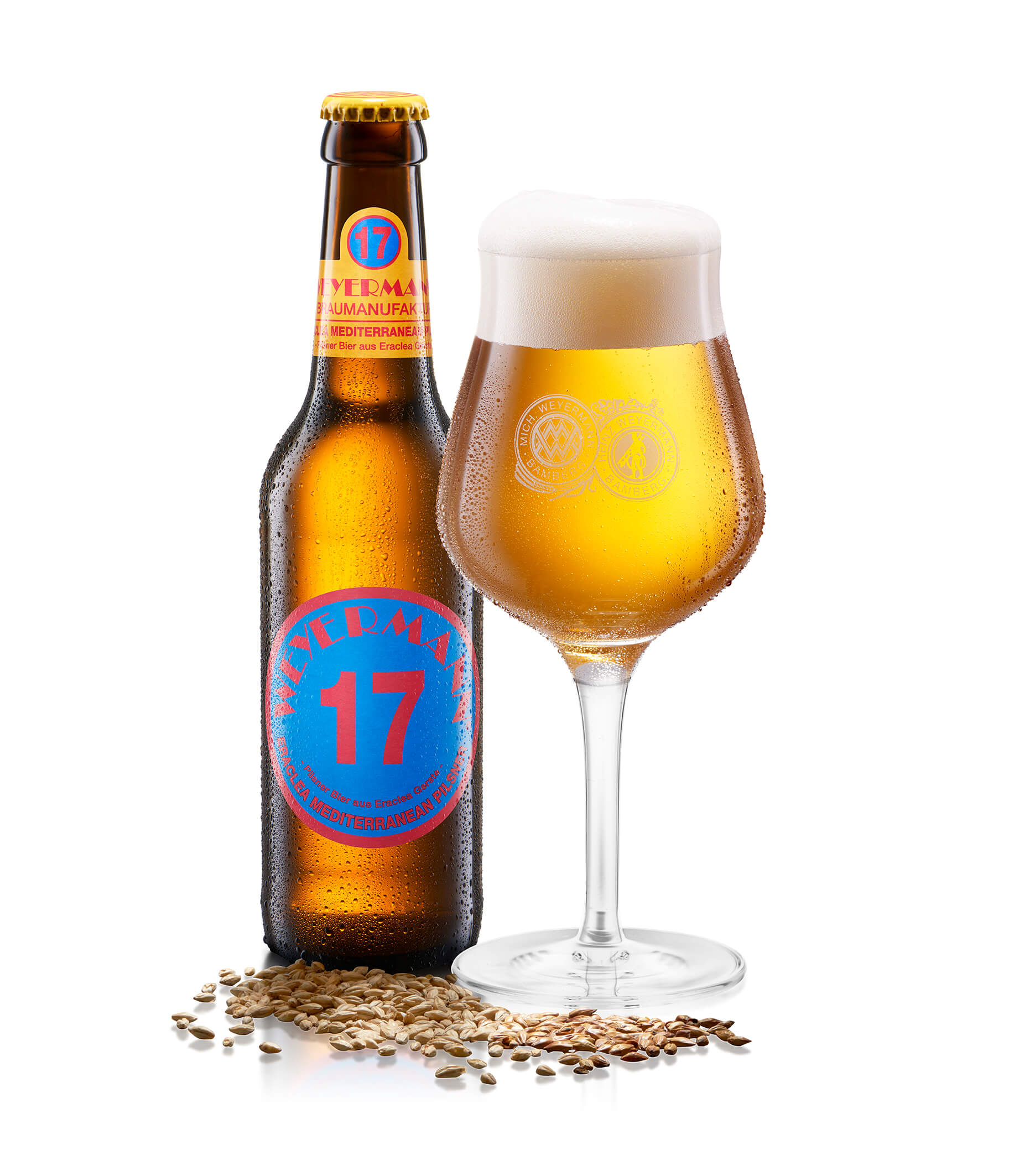
Weyermann Nr.17 Eraclea Mediterranean Pilsner
Weyermann is the company responsible for so many of the delicious malt varieties that I’ve recommended in all of the pilsner articles. Their Italian pilsner malt, Eraclea, is featured prominently in this recipe, providing a rich, full body. The two hop varieties, Aurora and Bobek, give the beer fine floral notes of lavender and violet, as well as hints of blackcurrant-like dark berries. Overall, this pilsner is spritzy, effervescent and refreshing. Weyermann suggests pairing this beer with a mild fish such as pike or perch, baked in an almond crushed. Paella or risotto is also quite suitable for this beer.
BREW SHEET · BEERXML
Nr.17 Eraclea Mediterranean Pilsner
Experimental Beer
Download BeerXML- Batch
- 5.00 gal
- OG
- 1.046
- FG
- 1.010
- ABV
- 4.7%
- IBU
- 40
- Boil
- 60 min
Fermentables
| Ingredient | Amount | Details |
|---|---|---|
| Eraclea Pilsner Malt | 7 lbs 8.0 oz | Grain |
| Carapils | 14.4 oz | Grain |
| Acidulated (Weyermann) | 4.0 oz | Grain |
Hops
| Ingredient | Amount | Addition |
|---|---|---|
| Aurora | 1.00 oz | Boil · 60.0 min · 8.6% alpha acid |
| Bobek | 1.50 oz | Boil · 10.0 min · 5.25% alpha acid |
Yeast
| Ingredient | Amount | Details |
|---|---|---|
| Saflager Lager | 50.28 ml | DCL/Fermentis · W-34/70 |
Mash schedule
- Infusion · 145.0 F · 30 min · 16.37 L infusion
- Mash Step · 161.6 F · 15 min · 0 L infusion
- Saccharification · 171.0 F · 5 min · 0 L infusion
Fermentation
- Primary: 16 days at 12.2 °C
- Secondary: 4 days at 16.7 °C
- Tertiary: 7 days
Brewer’s notes
Adjust your acidulated malt for a mash PH of 5.2-5.4. The Weyermann recipe given to me recommends roughly 2.3-2.8 volumes of carbonation. No fermentation schedule was given to me for this recipe, outside of using the 34/70 yeast.
Full technical details
Original export fields, ingredient specifications, water, style and equipment.
Fermentables
Eraclea Pilsner Malt
- Name
- Eraclea Pilsner Malt
- Type
- Grain
- Amount (kg / L for liquids)
- 3.4019400
- Yield
- 82.2300000
- Color (SRM)
- 1.7000000
- Add after boil
- FALSE
- Origin
- Germany
- Supplier
- Weyermann
- Notes
- Pilsner base malt for all pilsners, lagers. Highly modified malt.
- Coarse fine diff
- 1.2000000
- Moisture
- 4.4000000
- Diastatic power
- 110.0000000
- Protein
- 10.9000000
- Max in batch
- 100.0000000
- Recommend mash
- TRUE
- Ibu gal per lb
- 0.0000000
- Display amount
- 7 lbs 8.0 oz
- Inventory
- 0.0 oz
- Potential
- 1.0378258
- Display color
- 1.7 SRM
- Extract substitute
- Pilsner Liquid Extract
Carapils
- Name
- Carapils
- Type
- Grain
- Amount (kg / L for liquids)
- 0.4082328
- Yield
- 73.0000000
- Color (SRM)
- 1.5000000
- Add after boil
- FALSE
- Origin
- Germany
- Supplier
- Weyermann
- Notes
- FLAVOR: None COLOR: None ITEM NUMBERS AND PACKAGING OPTIONS adds body, foam retention, and beer stability without influencing color or flavor. non-fermentables to balance body and flavor of dark beers Low usage of 1-5% will help achieve desired resu
- Coarse fine diff
- 0.0000000
- Moisture
- 1.5000000
- Diastatic power
- 0.0000000
- Protein
- 0.0000000
- Max in batch
- 0.0000000
- Recommend mash
- FALSE
- Ibu gal per lb
- 0.0000000
- Display amount
- 14.4 oz
- Inventory
- 0.0 oz
- Potential
- 1.0335800
- Display color
- 1.5 SRM
Acidulated (Weyermann)
- Name
- Acidulated (Weyermann)
- Type
- Grain
- Amount (kg / L for liquids)
- 0.1133980
- Yield
- 65.2000000
- Color (SRM)
- 1.8000000
- Add after boil
- FALSE
- Origin
- Germany
- Supplier
- Weyermann
- Notes
- Used in Germany to lower PH levels without resorting to chemicals. Lowers mash pH levels, lightens color, improves flavor stability.
- Coarse fine diff
- 1.5000000
- Moisture
- 4.0000000
- Diastatic power
- 0.0000000
- Protein
- 0.0000000
- Max in batch
- 10.0000000
- Recommend mash
- TRUE
- Ibu gal per lb
- 0.0000000
- Display amount
- 4.0 oz
- Inventory
- 0.0 oz
- Potential
- 1.0299920
- Display color
- 1.8 SRM
- Extract substitute
- Pale Liquid Extract
Hops
Aurora
- Name
- Aurora
- Origin
- Slovenia
- Alpha acid (%)
- 8.6000000
- Amount (kg / L for liquids)
- 0.0283495
- Use
- Boil
- Time (min)
- 60.0000000
- Notes
- Also called Super Styrian. This is a hybrid between Northern Brewer and TG. It has a pleasant hoppy aroma similar to Styrian Goldings but lighter. Used for: Often mixed with other hops in lagers. Substitutes: Styrian Goldings
- Type
- Both
- Form
- Pellet
- Beta
- 3.5000000
- Hsi
- 23.0000000
- Display amount
- 1.00 oz
- Inventory
- 0.00 oz
- Display time
- 60.0 min
Bobek
- Name
- Bobek
- Origin
- Slovenia
- Alpha acid (%)
- 5.2500000
- Amount (kg / L for liquids)
- 0.0425243
- Use
- Boil
- Time (min)
- 10.0000000
- Notes
- Also called Styrian Golding B - a cross between Northern Brewer and a TG seedling. Pleasant hop aroma and flavor. Used for: Moderate English ales and lagers/Pilsners Substitutes: Northern Brewer
- Type
- Both
- Form
- Pellet
- Beta
- 5.0000000
- Hsi
- 20.0000000
- Display amount
- 1.50 oz
- Inventory
- 0.00 oz
- Display time
- 10.0 min
Yeast
Saflager Lager
- Name
- Saflager Lager
- Type
- Lager
- Form
- Dry
- Amount (kg / L for liquids)
- 0.0502753
- Amount is weight
- FALSE
- Laboratory
- DCL/Fermentis
- Product id
- W-34/70
- Min temperature
- 8.8888889
- Max temperature
- 15.0000000
- Flocculation
- High
- Attenuation (%)
- 83.5000000
- Notes
- A famous yeast strain from Weihenstephan Germany used worldwide in brewing. Their most popular strain for lagers.
- Best for
- European lagers
- Max reuse
- 5
- Times cultured
- 0
- Add to secondary
- FALSE
- Display amount
- 50.28 ml
- Disp min temp
- 48.0 F
- Disp max temp
- 59.0 F
- Inventory
- 0.0 pkg
- Culture date
- 06 Mar 2011
Mash
- Name
- Decoction Mash, Single
- Grain temp
- 22.2222222
- Tun temp
- 22.2222222
- Sparge temp
- 75.5555556
- Ph
- 5.4000000
- Tun weight
- 64.0000000
- Tun specific heat
- 0.3000000
- Equip adjust
- FALSE
- Notes
- Used in some authentic German styles. Attempt to draw decoction from the thickest portion of the mash. Profiles vary. Some traditional German mashes use a long acid rest at 40 deg C. Also some sources recommend the decoction amount be given a 15 minute saccharification rest at 158 F (70 C) before boiling it.
- Display grain temp
- 72.0 F
- Display tun temp
- 72.0 F
- Display sparge temp
- 168.0 F
- Display tun weight
- 4 lbs
Infusion
- Name
- Infusion
- Type
- Infusion
- Infusion water (L)
- 16.3720003
- Step time (min)
- 30.0000000
- Step temperature (°C)
- 62.7777778
- Ramp time
- 2.0000000
- End temp
- 62.7777778
- Description
- Add 17.30 qt of water at 151.6 F
- Water grain ratio
- 2.000 qt/lb
- Decoction amt
- 0.00 qt
- Infuse temp
- 151.6 F
- Display step temp
- 145.0 F
- Display infuse amt
- 17.30 qt
Mash Step
- Name
- Mash Step
- Type
- Temperature
- Infusion water (L)
- 0.0000000
- Step time (min)
- 15.0000000
- Step temperature (°C)
- 72.0000000
- Ramp time
- 4.0000000
- End temp
- 72.0000000
- Description
- Heat to 161.6 F over 4 min
- Water grain ratio
- 2.000 qt/lb
- Decoction amt
- 0.00 qt
- Infuse temp
- 161.6 F
- Display step temp
- 161.6 F
- Display infuse amt
- 0.00 qt
Saccharification
- Name
- Saccharification
- Type
- Decoction
- Infusion water (L)
- 0.0000000
- Step time (min)
- 5.0000000
- Step temperature (°C)
- 77.2222222
- Ramp time
- 2.0000000
- End temp
- 77.2222222
- Description
- Decoct 3.73 qt of mash and boil it
- Water grain ratio
- 2.000 qt/lb
- Decoction amt
- 3.73 qt
- Infuse temp
- 0.0 F
- Display step temp
- 171.0 F
- Display infuse amt
- 0.00 qt
Recipe details & fermentation
- Name
- Nr.17 Eraclea Mediterranean Pilsner
- Type
- All Grain
- Brewer
- Weyermann
- Batch size (L)
- 18.9271680
- Boil size (L)
- 24.7173041
- Boil time (min)
- 60.0000000
- Efficiency (%)
- 77.0000000
- Notes
- Adjust your acidulated malt for a mash PH of 5.2-5.4. The Weyermann recipe given to me recommends roughly 2.3-2.8 volumes of carbonation. No fermentation schedule was given to me for this recipe, outside of using the 34/70 yeast.
- Taste rating
- 30.0000000
- Original gravity
- 1.0460000
- Final gravity
- 1.0100000
- Carbonation
- 2.6000000
- Fermentation stages
- 3
- Primary duration (days)
- 16.0000000
- Primary temperature (°C)
- 12.2222222
- Secondary duration (days)
- 4.0000000
- Secondary temperature (°C)
- 16.6666667
- Tertiary duration (days)
- 7.0000000
- Conditioning duration (days)
- 30.0000000
- Conditioning temperature (°C)
- 1.6666667
- Carbonation used
- Keg with 16.06 PSI
- Forced carbonation
- FALSE
- Priming sugar name
- Forced Carbonation
- Priming sugar equiv
- 1.0000000
- Keg priming factor
- 0.5000000
- Carbonation temp
- 7.2222222
- Display carb temp
- 45.0 F
- Date
- 05 Jul 2021
- Est og
- 1.049 SG
- Est fg
- 1.012 SG
- Est color
- 2.8 SRM
- IBU
- 40.0 IBUs
- Ibu method
- Tinseth
- Est abv
- 4.9 %
- ABV (%)
- 4.7 %
- Actual efficiency
- 71.6 %
- Calories
- 151.6 kcal/12oz
- Display batch size
- 5.00 gal
- Display boil size
- 6.53 gal
- Display og
- 1.046 SG
- Display fg
- 1.010 SG
- Display primary temp
- 54.0 F
- Display secondary temp
- 62.0 F
- Display tertiary temp
- 62.0 F
- Display age temp
- 35.0 F
Style details
- Name
- Experimental Beer
- Category
- Specialty Beer
- Category number
- 34
- Style letter
- C
- Style guide
- BJCP 2015
- Type
- Mixed
- Og min
- 1.0200000
- Og max
- 1.0900000
- Fg min
- 1.0060000
- Fg max
- 1.0160000
- Ibu min
- 5.0000000
- Ibu max
- 50.0000000
- Color min
- 2.0000000
- Color max
- 50.0000000
- Carb min
- 2.0000000
- Carb max
- 3.0000000
- Abv max
- 10.0000000
- Abv min
- 2.0000000
- Notes
- This is explicitly a catch-all category for any beer that does not fit into an existing style description. No beer is ever “out of style” in this style, unless it fits elsewhere. This is the last resort for any beer entered into a competition. Overall Impression: Varies, but should be a unique experience. Entry Instructions: The entrant must specify the special nature of the experimental beer, including the special ingredients or processes that make it not fit elsewhere in the guidelines. The entrant must provide vital statistics for the beer, and either a brief sensory description or a list of ingredients used in making the beer. Without this information, judges will have no basis for comparison.
- Profile
- OG, FG, IBUs, SRM and ABV will vary. This style is the ultimate in creativity, since it cannot represent a well-known commercial beer (otherwise it would be a clone beer) and cannot fit into any other existing Specialty-Type style (including those within this major category).
- Ingredients
- Varies.
- Examples
- None listed.
- Display og min
- 1.020 SG
- Display og max
- 1.090 SG
- Display fg min
- 1.006 SG
- Display fg max
- 1.016 SG
- Display color min
- 2.0 SRM
- Display color max
- 50.0 SRM
- Og range
- 1.020-1.090 SG
- Fg range
- 1.006-1.016 SG
- Ibu range
- 5.0-50.0 IBUs
- Carb range
- 2.00-3.00 Vols
- Color range
- 2.0-50.0 SRM
- Abv range
- 2.00-10.00 %
Equipment
- Name
- Pot and Cooler ( 5 Gal/19 L) - All Grain
- Boil size (L)
- 24.7173041
- Batch size (L)
- 18.9271680
- Tun volume
- 18.9271680
- Tun weight
- 1.8143680
- Tun specific heat
- 0.3000000
- Top up water
- 0.0000000
- Trub chiller loss
- 2.8390752
- Evap rate
- 8.2700530
- Boil time (min)
- 60.0000000
- Calc boil volume
- TRUE
- Lauter deadspace
- 0.9463584
- Top up kettle
- 0.0000000
- Hop utilization
- 100.0000000
- Cooling loss pct
- 4.0000000
- Notes
- Popular all grain setup. 5 Gallon cooler as mash tun with false bottom, and 7-9 gallon brewpot capable of boiling at least 6 gallons of wort without spilling over. Primarily used for single infusion mashes.
- Display boil size
- 6.53 gal
- Display batch size
- 5.00 gal
- Display tun volume
- 5.00 gal
- Display tun weight
- 4 lbs
- Display top up water
- 0.00 gal
- Display trub chiller loss
- 0.75 gal
- Display lauter deadspace
- 0.25 gal
- Display top up kettle
- 0.00 gal
Birrificio Italiano Tipopils (subscription required)
Beer and Brewing published this recipe in 2020. It came directly from the brewer, Agostino Arioli. It’s nearly identical to the recipe published in Jeff Alworth’s The Secrets of Master Brewers, so much so that I could see the subtle differences being due to hop crops or grain analysis year to year. If you really want to see how this recipe has evolved, noted German beer writer Horst Dornbusch published the original 1996 version of Tipopils in BYO.
Birra Venezia (subscription required)
Horst Dornbusch also published this Italian pils recipe recently in BYO. While not a beer I have personally tried, it uses two brand new hops, Diamant and Aurum, which I’ve tried in a pair of single hopped kellerpils at a local brewery. I can say they fit the profile of German noble hops, albeit with their own unique flavors. They’re worth a try in this recipe, other Italian pilsner recipes, or German style pilsners.

No comments yet