You can help support the show by trying out Brewfather brewing software for free: https://brewfather.app/?via=homebrewingdiy
Subscribe with your favorite podcast service
Show Notes:
One of the biggest issues of BrewPi Remix is that people Google BrewPi and they get directed to old forum posts. When you look at old posts like this you will find outdated instructions. With BrewPi Remix you can install the software with a single one-line command.
The Brew Pi is an amazing piece of software and hardware and has been around for a very long time. Today we are going to talk about the Brew PI Remix and how you can build a controller easier than ever keeping your fermentation dialed to a tenth of a degree. Le Bussy the creator of Brew Pi Remix talks to us today on Homebrewing DIY.
Twitter Poll
https://twitter.com/homebrewingdiy/status/1177083920619167749?s=21
Here is a list of resources to help on your BrewPi Remix journey:
If you want more information about building your own BrewPi Remix set up head over to Lee's website at http://brewpiremix.com
You can find a list of needed parts here: https://www.brewpiremix.com/brewpi/
Here is the full BrewPi Remix documentation: http://docs.brewpiremix.com
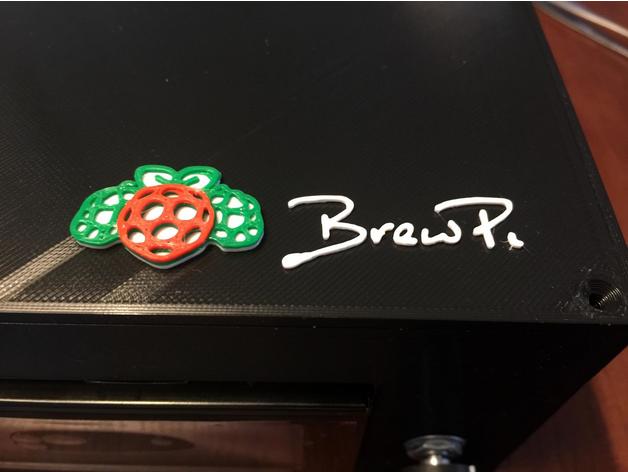
Here is an example of what your setup could look like: https://www.thingiverse.com/thing:3416312
Last here is Lee's Skeeter Pee recipe:
BREW SHEET · BEERXML
Skeeter Pee - Original
Other Fruit Wine
Download BeerXML- Batch
- 5.50 gal
- OG
- 1.070
- FG
- 0.980
- ABV
- 11.9%
- IBU
- 0
- Boil
- 0 min
Fermentables
| Ingredient | Amount | Details |
|---|---|---|
| Sugar, Table (Sucrose) | 8 lbs 4.0 oz | Sugar |
| Juice - Lemon | 4 lbs 3.4 oz | Juice |
| Juice - Lemon | 2 lbs 1.7 oz | Juice |
| Sugar, Table (Sucrose) | 2 lbs 10.6 oz | Sugar |
Other additions
| Ingredient | Amount | Addition |
|---|---|---|
| Tannin | 0.75 tsp | Boil · 0.0 mins |
| Yeast Nutrient | 3.00 tsp | Primary · 0.0 days |
| Yeast Energizer | 1.00 tsp | Primary · 0.0 days |
| Yeast Energizer | 3.00 tsp | Primary · 5.0 days |
| Yeast Nutrient | 1.00 tsp | Primary · 5.0 days |
| Sparkolloid | 6.25 g | Secondary · 0.0 mins |
| Potassium Sorbate | 8.20 g | Secondary · 0.0 mins |
| Potassium Metabisulfite | 3.20 g | Secondary · 0.0 mins |
Yeast
| Ingredient | Amount | Details |
|---|---|---|
| Lalvin 71B-1122 | 23.66 ml | Lallemand - Lalvin · 71B-1122 |
Mash schedule
- Mash In · 150.0 F · 75 min · 11.83 L infusion
Fermentation
- Primary: 7 days at 19.4 °C
- Secondary: 10 days at 19.4 °C
- Tertiary: 7 days
Brewer’s notes
Adapted from: https://www.skeeterpee.com Make invert sugar by adding the 8.25 lbs sugar to a large stainless cooking pot with 8 cups water, 1/3 cup lemon juice, and the tanin. Stir sugar to dissolve and heat to just below boiling while stirring. Hold at this temperature for about 30 minutes. Allow to cool slightly and pour it into the primary along with 2 of the bottles of the lemon juice, and enough additional water to make 5 1/2 gallons. Aerate with filtered air through a diffuser stone for 24 hours to strip out the sulfites from the juice. After 24 hours, re-hydrate 3 packets of Lalvin 71B yeast: Mix 18.75 grams of GoFerm with 375ml 110°F water. Let the mixture cool to 104°F and add the dried yeast. Let stand for 20 minutes. Slowly (over 5 minutes) add 375ml of must (juice) to be fermented to the yeast slurry. When there is no more than 10°C(18°F) difference between the must (juice) and the yeast slurry, pitch. Aerate for 12 additional hours after pitching. After 12 hours, remove the air and add 2.49 grams of FermAidK dissolved in room-temperature water. Periodically check the gravity. When it gets down to around 1.050, add a second dose of 2.49 grams of FermAidK dissolved in room-temperature water, and the last bottle of lemon juice; vigorously mix it in. Don’t be afraid to introduce some oxygen to the mix at the same time. This late addition of yeast food and oxygen helps reduce the likelihood of the batch developing a sulfur-dioxide problem. When fermentation has completed and dropped mostly clear, rack into a clean, sanitized carboy. Prepare Sparkalloid: Mix 6.25g of Sparkolloid in 150 ml (5 fluid ounce) of water. Heat to boiling in a double boiler and simmer for half an hour. Prevent scorching by frequent stirring. Replace any liquid which is lost by evaporation with additional water. Stir the wine and slowly add the hot Sparkolloid while still stirring. Add the 3.2g Potassium metabisulfite and 8.2g Potassium sorbate dissolved in a minimal amount of water. Do not dissolve in the hot water with the Sparkalloid or else the Potassium metabisulfite will gas off. Re-attach airlock and let sit approximately one week to drop clear. Optionally, re-fine with Bentonite after dropping clear to compact the Sparkalloid which is otherwise easily disturbed. Prepare Bentonite: In a clean preparation container make a thin slurry using 20 ml of water per gram of bentonite needed. Vigorous mixing may get the bentonite fully hydrated in about 10 minutes. Either hot or cold water can be used but hot water should make hydration faster & easier. Make sure all particles are wetted (no lumps). Add to the wine and stir. Settling will normally take about a week, after which time wine can be racked off the sediment. Rack into a clean, sanitized keg, add 6 cups sugar and stir to dissolve. Carbonate under pressure. 15 PSI @ 35°F is approximately 3 volumes and perfect for this beverage.
Full technical details
Original export fields, ingredient specifications, water, style and equipment.
Fermentables
Sugar, Table (Sucrose)
- Name
- Sugar, Table (Sucrose)
- Type
- Sugar
- Amount (kg / L for liquids)
- 3.7421340
- Yield
- 100.0000000
- Color (SRM)
- 0.0000000
- Add after boil
- FALSE
- Origin
- US
- Notes
- White table sugar, or sucrose primarily is used to increase alcohol. Using too much will add a cider flavor to beer.
- Coarse fine diff
- 1.5000000
- Moisture
- 4.0000000
- Diastatic power
- 120.0000000
- Protein
- 11.7000000
- Max in batch
- 10.0000000
- Recommend mash
- FALSE
- Ibu gal per lb
- 0.0000000
- Display amount
- 8 lbs 4.0 oz
- Inventory
- 0.0 oz
- Potential
- 1.0460000
- Display color
- 0.0 SRM
Juice - Lemon
- Name
- Juice - Lemon
- Type
- Juice
- Amount (kg / L for liquids)
- 1.9107868
- Yield
- 2.4500000
- Color (SRM)
- 1.0000000
- Add after boil
- FALSE
- Coarse fine diff
- 1.5000000
- Moisture
- 4.0000000
- Diastatic power
- 120.0000000
- Protein
- 11.7000000
- Max in batch
- 100.0000000
- Recommend mash
- FALSE
- Ibu gal per lb
- 0.0000000
- Display amount
- 4 lbs 3.4 oz
- Inventory
- 0.0 oz
- Potential
- 1.0011270
- Display color
- 1.0 SRM
Juice - Lemon
- Name
- Juice - Lemon
- Type
- Juice
- Amount (kg / L for liquids)
- 0.9553934
- Yield
- 2.4500000
- Color (SRM)
- 1.0000000
- Add after boil
- FALSE
- Coarse fine diff
- 1.5000000
- Moisture
- 4.0000000
- Diastatic power
- 120.0000000
- Protein
- 11.7000000
- Max in batch
- 100.0000000
- Recommend mash
- FALSE
- Ibu gal per lb
- 0.0000000
- Display amount
- 2 lbs 1.7 oz
- Inventory
- 0.0 oz
- Potential
- 1.0011270
- Display color
- 1.0 SRM
Sugar, Table (Sucrose)
- Name
- Sugar, Table (Sucrose)
- Type
- Sugar
- Amount (kg / L for liquids)
- 1.2065547
- Yield
- 100.0000000
- Color (SRM)
- 0.0000000
- Add after boil
- TRUE
- Origin
- US
- Notes
- White table sugar, or sucrose primarily is used to increase alcohol. Using too much will add a cider flavor to beer.
- Coarse fine diff
- 1.5000000
- Moisture
- 4.0000000
- Diastatic power
- 120.0000000
- Protein
- 11.7000000
- Max in batch
- 10.0000000
- Recommend mash
- FALSE
- Ibu gal per lb
- 0.0000000
- Display amount
- 2 lbs 10.6 oz
- Inventory
- 0.0 oz
- Potential
- 1.0460000
- Display color
- 0.0 SRM
Other additions
Tannin
- Name
- Tannin
- Type
- Flavor
- Use
- Boil
- Amount (kg / L for liquids)
- 0.003697
- Time (min)
- 0.00
- Amount is weight
- FALSE
- Use for
- Balancing wine flavor
- Display amount
- 0.75 tsp
- Inventory
- 0.00 tsp
- Display time
- 0.0 mins
- Batch size (L)
- 5.00 gal
Yeast Nutrient
- Name
- Yeast Nutrient
- Type
- Other
- Use
- Primary
- Amount (kg / L for liquids)
- 0.014787
- Time (min)
- 0.00
- Amount is weight
- FALSE
- Use for
- Fermentation
- Notes
- Gives yeast nutrients for healthy fermentation. Not needed for most beers, but good for those with a high percentage of adjuncts. Add before yeast.
- Display amount
- 3.00 tsp
- Inventory
- 0.00 tsp
- Display time
- 0.0 days
- Batch size (L)
- 5.00 gal
Yeast Energizer
- Name
- Yeast Energizer
- Type
- Other
- Use
- Primary
- Amount (kg / L for liquids)
- 0.004929
- Time (min)
- 0.00
- Amount is weight
- FALSE
- Use for
- Fermentation aid
- Display amount
- 1.00 tsp
- Inventory
- 0.00 tsp
- Display time
- 0.0 days
- Batch size (L)
- 1.00 gal
Yeast Energizer
- Name
- Yeast Energizer
- Type
- Other
- Use
- Primary
- Amount (kg / L for liquids)
- 0.014787
- Time (min)
- 7200.00
- Amount is weight
- FALSE
- Use for
- Fermentation aid
- Display amount
- 3.00 tsp
- Inventory
- 0.00 tsp
- Display time
- 5.0 days
- Batch size (L)
- 1.00 gal
Yeast Nutrient
- Name
- Yeast Nutrient
- Type
- Other
- Use
- Primary
- Amount (kg / L for liquids)
- 0.004929
- Time (min)
- 7200.00
- Amount is weight
- FALSE
- Use for
- Fermentation
- Notes
- Gives yeast nutrients for healthy fermentation. Not needed for most beers, but good for those with a high percentage of adjuncts. Add before yeast.
- Display amount
- 1.00 tsp
- Inventory
- 0.00 tsp
- Display time
- 5.0 days
- Batch size (L)
- 5.00 gal
Sparkolloid
- Name
- Sparkolloid
- Type
- Fining
- Use
- Secondary
- Amount (kg / L for liquids)
- 0.006250
- Time (min)
- 0.00
- Amount is weight
- TRUE
- Use for
- Clearing
- Display amount
- 6.25 g
- Inventory
- 0.00 g
- Display time
- 0.0 mins
- Batch size (L)
- 5.00 gal
Potassium Sorbate
- Name
- Potassium Sorbate
- Type
- Other
- Use
- Secondary
- Amount (kg / L for liquids)
- 0.008200
- Time (min)
- 0.00
- Amount is weight
- TRUE
- Use for
- Prevent fermentation
- Display amount
- 8.20 g
- Inventory
- 0.00 g
- Display time
- 0.0 mins
- Batch size (L)
- 1.00 gal
Potassium Metabisulfite
- Name
- Potassium Metabisulfite
- Type
- Other
- Use
- Secondary
- Amount (kg / L for liquids)
- 0.003200
- Time (min)
- 0.00
- Amount is weight
- TRUE
- Use for
- Sanitation and Stabilization
- Display amount
- 3.20 g
- Inventory
- 0.00 g
- Display time
- 0.0 mins
- Batch size (L)
- 5.00 gal
Yeast
Lalvin 71B-1122
- Name
- Lalvin 71B-1122
- Type
- Wine
- Form
- Dry
- Amount (kg / L for liquids)
- 0.0236588
- Amount is weight
- FALSE
- Laboratory
- Lallemand - Lalvin
- Product id
- 71B-1122
- Min temperature
- 15.0000000
- Max temperature
- 30.0000000
- Flocculation
- High
- Attenuation (%)
- 75.0000000
- Notes
- Rapid starter with constant and complete fermentation. Ability to metabolize high amounts (20-40%) of malic acid. Partial metabolism of malic acid helps soften the wine. May produce significant esters, making it a good choice for concentrates.
- Best for
- Young wines such as nouveau, blush and sugar white.
- Max reuse
- 5
- Times cultured
- 0
- Add to secondary
- FALSE
- Display amount
- 23.66 ml
- Disp min temp
- 59.0 F
- Disp max temp
- 86.0 F
- Inventory
- 0.0 pkg
- Culture date
- 24 Oct 2004
Mash
- Name
- Single Infusion, Light Body, No Mash Out
- Grain temp
- 22.2222222
- Tun temp
- 22.2222222
- Sparge temp
- 75.5555556
- Ph
- 5.4000000
- Tun weight
- 48.0000000
- Tun specific heat
- 0.1200000
- Equip adjust
- TRUE
- Notes
- Simple single infusion mash for use with most modern well modified grains (about 95% of the time).
- Display grain temp
- 72.0 F
- Display tun temp
- 72.0 F
- Display sparge temp
- 168.0 F
- Display tun weight
- 3 lbs
Mash In
- Name
- Mash In
- Type
- Infusion
- Infusion water (L)
- 11.8294118
- Step time (min)
- 75.0000000
- Step temperature (°C)
- 65.5555556
- Ramp time
- 2.0000000
- End temp
- 65.5555556
- Description
- Add 12.50 qt of water at 162.4 F
- Water grain ratio
- 1.250 qt/lb
- Decoction amt
- 0.00 qt
- Infuse temp
- 162.4 F
- Display step temp
- 150.0 F
- Display infuse amt
- 12.50 qt
Recipe details & fermentation
- Name
- Skeeter Pee - Original
- Type
- Extract
- Brewer
- L. Bussy
- Batch size (L)
- 20.8197648
- Boil size (L)
- 20.8197648
- Boil time (min)
- 0.0000000
- Efficiency (%)
- 72.0000000
- Notes
- Adapted from: https://www.skeeterpee.com Make invert sugar by adding the 8.25 lbs sugar to a large stainless cooking pot with 8 cups water, 1/3 cup lemon juice, and the tanin. Stir sugar to dissolve and heat to just below boiling while stirring. Hold at this temperature for about 30 minutes. Allow to cool slightly and pour it into the primary along with 2 of the bottles of the lemon juice, and enough additional water to make 5 1/2 gallons. Aerate with filtered air through a diffuser stone for 24 hours to strip out the sulfites from the juice. After 24 hours, re-hydrate 3 packets of Lalvin 71B yeast: Mix 18.75 grams of GoFerm with 375ml 110°F water. Let the mixture cool to 104°F and add the dried yeast. Let stand for 20 minutes. Slowly (over 5 minutes) add 375ml of must (juice) to be fermented to the yeast slurry. When there is no more than 10°C(18°F) difference between the must (juice) and the yeast slurry, pitch. Aerate for 12 additional hours after pitching. After 12 hours, remove the air and add 2.49 grams of FermAidK dissolved in room-temperature water. Periodically check the gravity. When it gets down to around 1.050, add a second dose of 2.49 grams of FermAidK dissolved in room-temperature water, and the last bottle of lemon juice; vigorously mix it in. Don’t be afraid to introduce some oxygen to the mix at the same time. This late addition of yeast food and oxygen helps reduce the likelihood of the batch developing a sulfur-dioxide problem. When fermentation has completed and dropped mostly clear, rack into a clean, sanitized carboy. Prepare Sparkalloid: Mix 6.25g of Sparkolloid in 150 ml (5 fluid ounce) of water. Heat to boiling in a double boiler and simmer for half an hour. Prevent scorching by frequent stirring. Replace any liquid which is lost by evaporation with additional water. Stir the wine and slowly add the hot Sparkolloid while still stirring. Add the 3.2g Potassium metabisulfite and 8.2g Potassium sorbate dissolved in a minimal amount of water. Do not dissolve in the hot water with the Sparkalloid or else the Potassium metabisulfite will gas off. Re-attach airlock and let sit approximately one week to drop clear. Optionally, re-fine with Bentonite after dropping clear to compact the Sparkalloid which is otherwise easily disturbed. Prepare Bentonite: In a clean preparation container make a thin slurry using 20 ml of water per gram of bentonite needed. Vigorous mixing may get the bentonite fully hydrated in about 10 minutes. Either hot or cold water can be used but hot water should make hydration faster & easier. Make sure all particles are wetted (no lumps). Add to the wine and stir. Settling will normally take about a week, after which time wine can be racked off the sediment. Rack into a clean, sanitized keg, add 6 cups sugar and stir to dissolve. Carbonate under pressure. 15 PSI @ 35°F is approximately 3 volumes and perfect for this beverage.
- Taste rating
- 30.0000000
- Original gravity
- 1.0700159
- Final gravity
- 0.9800000
- Carbonation
- 2.5000000
- Fermentation stages
- 2
- Primary duration (days)
- 7.0000000
- Primary temperature (°C)
- 19.4444444
- Secondary duration (days)
- 10.0000000
- Secondary temperature (°C)
- 19.4444444
- Tertiary duration (days)
- 7.0000000
- Conditioning duration (days)
- 20.0000000
- Conditioning temperature (°C)
- 18.3333333
- Carbonation used
- Keg with 14.89 PSI
- Forced carbonation
- FALSE
- Priming sugar name
- Forced Carbonation
- Priming sugar equiv
- 1.0000000
- Keg priming factor
- 0.5000000
- Carbonation temp
- 7.2222222
- Display carb temp
- 45.0 F
- Date
- 28 Jun 2019
- Est og
- 1.070 SG
- Est fg
- 1.006 SG
- Est color
- 1.6 SRM
- IBU
- 0.0 IBUs
- Ibu method
- Tinseth
- Est abv
- 8.5 %
- ABV (%)
- 11.9 %
- Actual efficiency
- 0.0 %
- Calories
- 221.0 kcal/12oz
- Display batch size
- 5.50 gal
- Display boil size
- 5.50 gal
- Display og
- 1.070 SG
- Display fg
- 0.980 SG
- Display primary temp
- 67.0 F
- Display secondary temp
- 67.0 F
- Display tertiary temp
- 65.0 F
- Display age temp
- 65.0 F
Style details
- Name
- Other Fruit Wine
- Category
- Fruit Wines
- Category number
- W10
- Style letter
- D
- Style guide
- Wine 2018
- Og min
- 1.0701000
- Og max
- 1.1100000
- Fg min
- 0.9920000
- Fg max
- 0.9980000
- Ibu min
- 0.0000000
- Ibu max
- 0.0000000
- Color min
- 2.0000000
- Color max
- 10.0000000
- Carb min
- 0.0000000
- Carb max
- 1.0000000
- Abv max
- 14.2000000
- Abv min
- 9.8000000
- Notes
- Wine made from other fruits not covered by an existing style. Wine maker should specify the fruit used.
- Profile
- Varies accouding to the fruit used. Character should reflect the color and flavor of the fermented fruit.
- Ingredients
- Examples include tropical fruits, pineapple, rose hip wine, citric fruits, oranges, dandelion wine.
- Examples
- Vary - many are home made.
- Display og min
- 1.070 SG
- Display og max
- 1.110 SG
- Display fg min
- 0.992 SG
- Display fg max
- 0.998 SG
- Display color min
- 2.0 SRM
- Display color max
- 10.0 SRM
- Og range
- 1.070-1.110 SG
- Fg range
- 0.992-0.998 SG
- Ibu range
- 0.0-0.0 IBUs
- Carb range
- 0.00-1.00 Vols
- Color range
- 2.0-10.0 SRM
- Abv range
- 9.80-14.20 %
Equipment
- Name
- Wine - Standard 6 Gal/23 l
- Boil size (L)
- 20.8197648
- Batch size (L)
- 20.8197648
- Tun volume
- 18.9270589
- Tun weight
- 4.5359200
- Tun specific heat
- 0.3000000
- Top up water
- 0.0000000
- Trub chiller loss
- 0.0000000
- Evap rate
- 0.0000000
- Boil time (min)
- 0.0000000
- Calc boil volume
- FALSE
- Lauter deadspace
- 0.0000000
- Top up kettle
- 0.0000000
- Hop utilization
- 100.0000000
- Cooling loss pct
- 0.0000000
- Notes
- Most popular wine kit size - starts with 6 gal/23 l of wine in a 7.5-9 gal (30-35 l) bucket or carboy. Primary fermentation is often done in a large palstic bucket and secondary and later phases are often done in carboy to minimize oxygen.
- Display boil size
- 5.50 gal
- Display batch size
- 5.50 gal
- Display tun volume
- 5.00 gal
- Display tun weight
- 10 lbs
- Display top up water
- 0.00 gal
- Display trub chiller loss
- 0.00 gal
- Display lauter deadspace
- 0.00 gal
- Display top up kettle
- 0.00 gal
Support The Podcast
Support this podcast: http://anchor.fm/homebrewingdiy/support
Follow the show on Twitter, Facebook, and Instagram: @homebrewingdiy
Email feedback to podcast@homebrewingdiy.beer
Music:
Intro Music: SUNBIRDS by BOCrew (c) copyright 2012 Licensed under a Creative Commons Attribution (3.0) license. http://dig.ccmixter.org/files/BOCrew/38854 Ft: THEDEEPR / THECORNER / feat : FORENSIC
Not enough Horsefeathers by Fireproof_Babies (c) copyright 2008 Licensed under a Creative Commons Attribution (3.0) license. http://dig.ccmixter.org/files/Fireproof_Babies/13115 Ft: duckett, kulimu
Paper Planes - Durden ft. Airtone by DURDEN (c) copyright 2016 Licensed under a Creative Commons Attribution (3.0) license. http://dig.ccmixter.org/files/DURDEN/55041 Ft: Airtone

No comments yet